INFP Personality Type – Traits, Strengths, Relationships & More
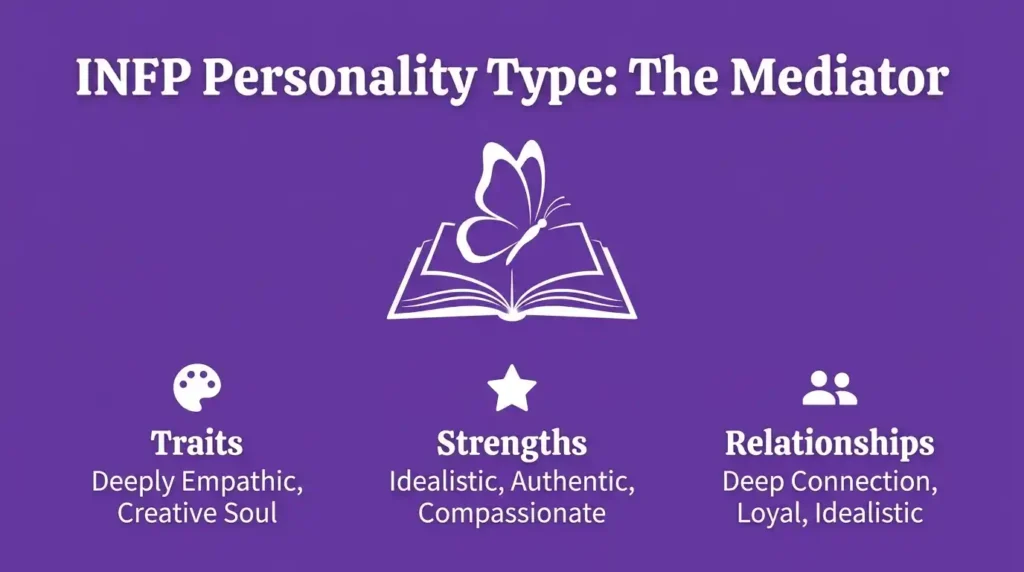
The INFP personality type, often called “The Mediator” or “The Idealist,” is known for creativity, empathy, and strong personal values. INFPs are thoughtful and introspective. They value authenticity, meaningful connections, and purpose in everything they do. Their idealistic nature inspires them to help others and make a positive impact.
INFPs have a rich inner world full of imagination and reflection. This guides their choices in life, work, and relationships. This guide explains the key traits, strengths, weaknesses, relationships, and career paths of INFPs. It provides a complete understanding of this unique and inspiring personality type.
What Is the INFP Personality Type?
The INFP personality is one of the 16 types in the Myers-Briggs Type Indicator (MBTI), often called “The Mediator” or “The Idealist.” INFPs are known for being deeply introspective, sensitive, and guided by their strong values and ideals. They are imaginative, empathetic, and often seek meaning and purpose in everything they do.
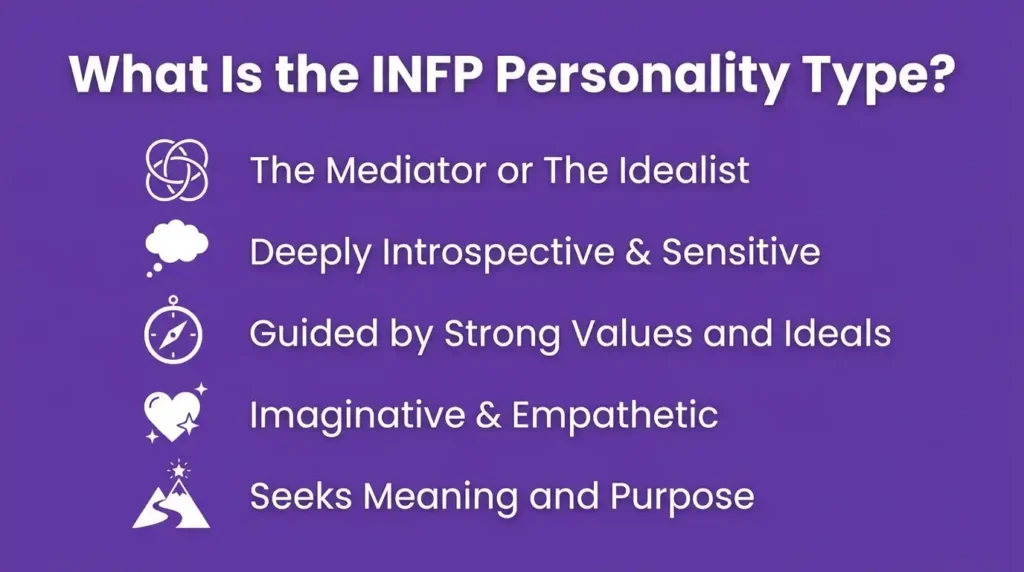
INFPs are typically quiet and reserved, preferring meaningful connections over large social circles. They are driven by a desire to help others and make a positive difference in the world, often showing creativity and originality in how they approach problems and express themselves. Their rich inner world allows them to understand emotions deeply, both their own and others’.
What does the INFP personality type stand for?
The INFP stands for four key traits based on the Myers-Briggs Type Indicator:
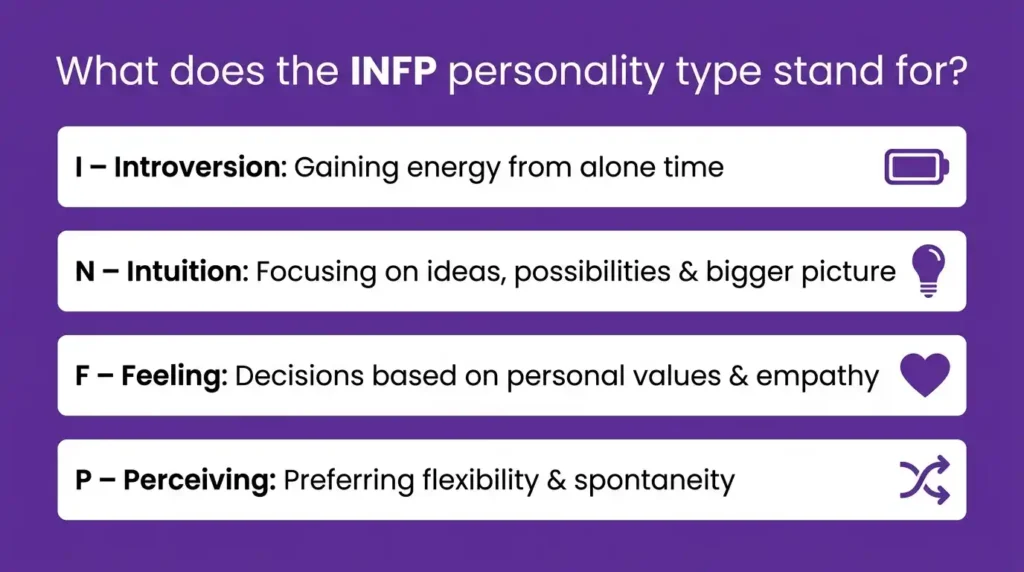
- I – Introversion: INFPs gain energy from spending time alone or in small, meaningful social settings rather than large groups.
- N – Intuition: They focus on ideas, possibilities, and the bigger picture rather than just immediate facts or details.
- F – Feeling: INFPs make decisions based on personal values, empathy, and how actions affect others rather than purely logic.
- P – Perceiving: They prefer flexibility and spontaneity, keeping options open instead of rigidly planning every step.
How Rare Is the INFP Type?
The INFP is considered relatively rare, making up about 4–5% of the general population. It is slightly more common among women than men, but overall, it remains one of the less frequently occurring MBTI types.
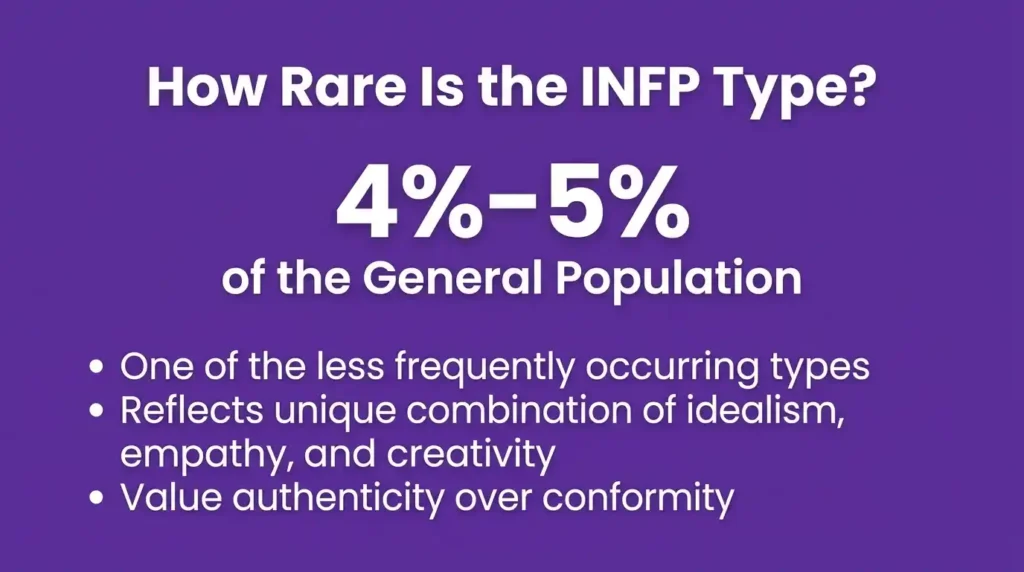
This rarity often reflects their unique combination of idealism, empathy, and creativity, which makes them stand out in social and professional settings. INFPs tend to think and act differently from more common personality types, valuing authenticity and meaning over conformity or practicality.
Cognitive Functions of an INFP
The INFP personality type relies on a specific set of cognitive functions that shape how they think, feel, and interact with the world:
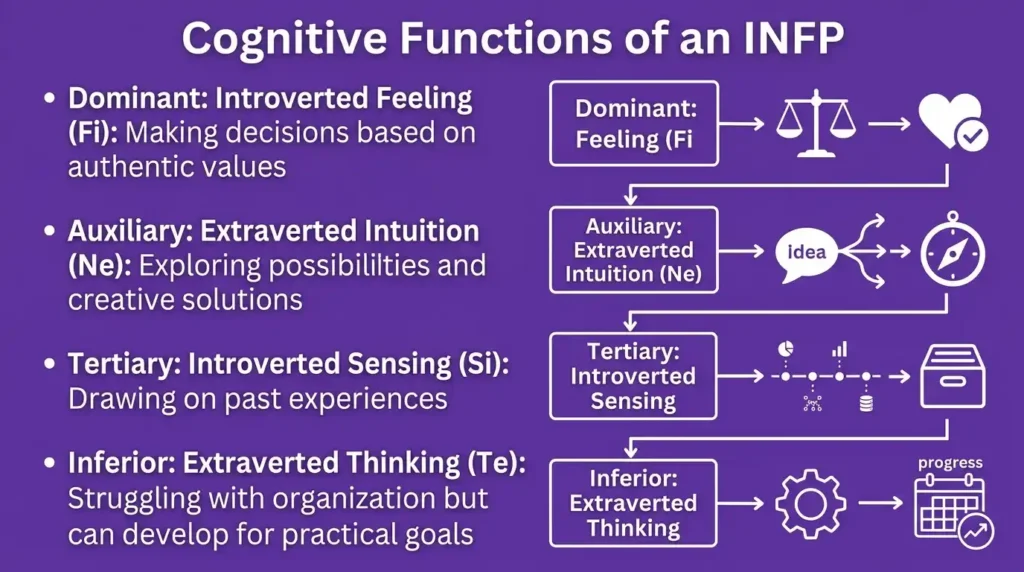
- Dominant: Introverted Feeling (Fi) – INFPs prioritize their inner values and emotions, making decisions based on what feels authentic and true to themselves.
- Auxiliary: Extraverted Intuition (Ne) – They explore possibilities, patterns, and ideas, often imagining multiple outcomes and creative solutions.
- Tertiary: Introverted Sensing (Si) – INFPs occasionally draw on past experiences and memories to guide their decisions or reflect on lessons learned.
- Inferior: Extraverted Thinking (Te) – They may struggle with organization, structure, or objective decision-making but can develop this function over time to achieve practical goals.
INFP Traits and Characteristics
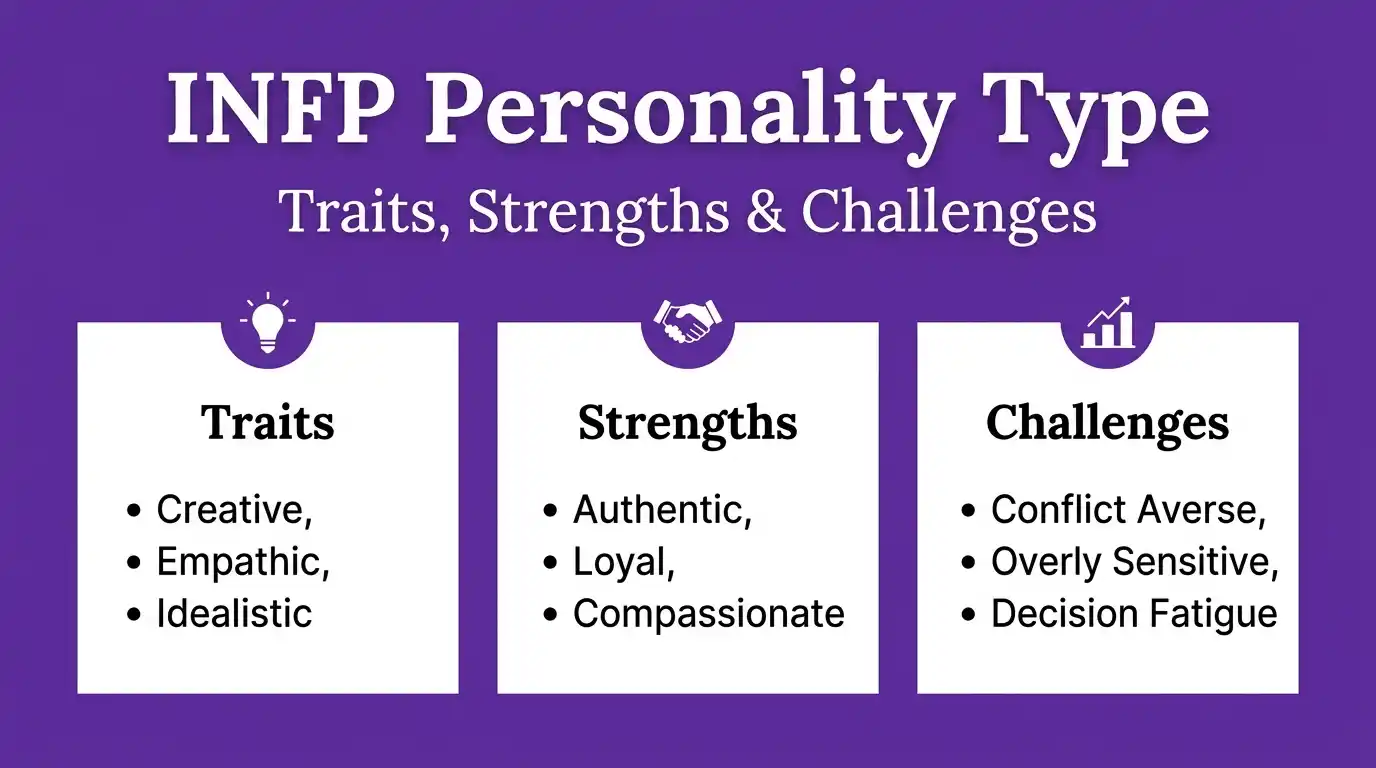
INFPs are known for a unique blend of idealism, creativity, and empathy. Their traits often reflect their deep inner world and strong personal values. Key characteristics include:
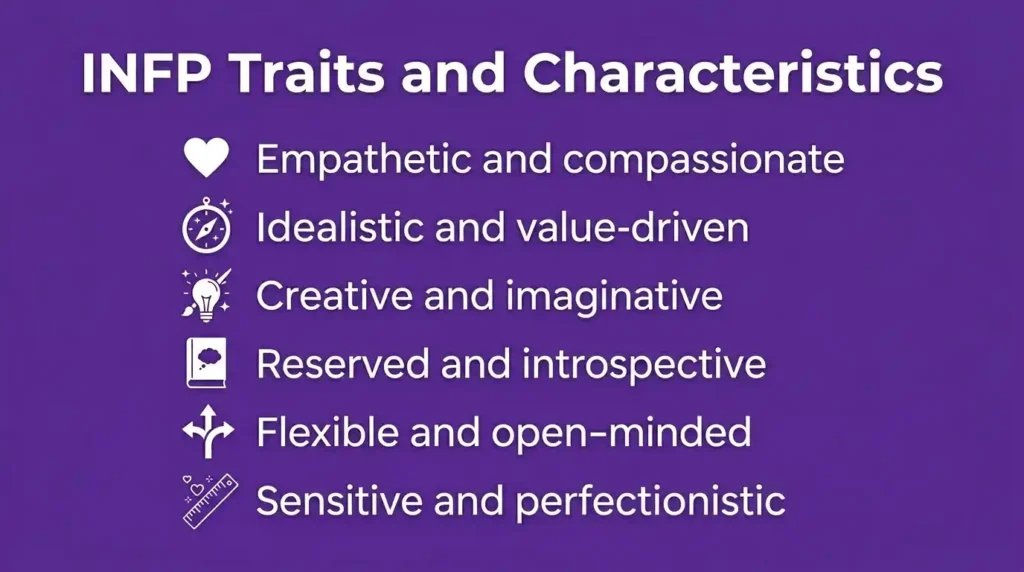
- Empathetic and compassionate: They easily understand and feel others’ emotions, often putting themselves in someone else’s shoes.
- Idealistic and value-driven: INFPs seek meaning and purpose, guided by their personal beliefs rather than external expectations.
- Creative and imaginative: They enjoy expressing themselves through art, writing, or problem-solving in innovative ways.
- Reserved and introspective: INFPs often need alone time to recharge and reflect on their thoughts and feelings.
- Flexible and open-minded: They prefer exploring options rather than sticking to rigid plans, adapting to new ideas and possibilities.
- Sensitive and perfectionistic: Their high standards and emotional awareness can make them sensitive to criticism or conflict.
INFP Strengths and Weaknesses
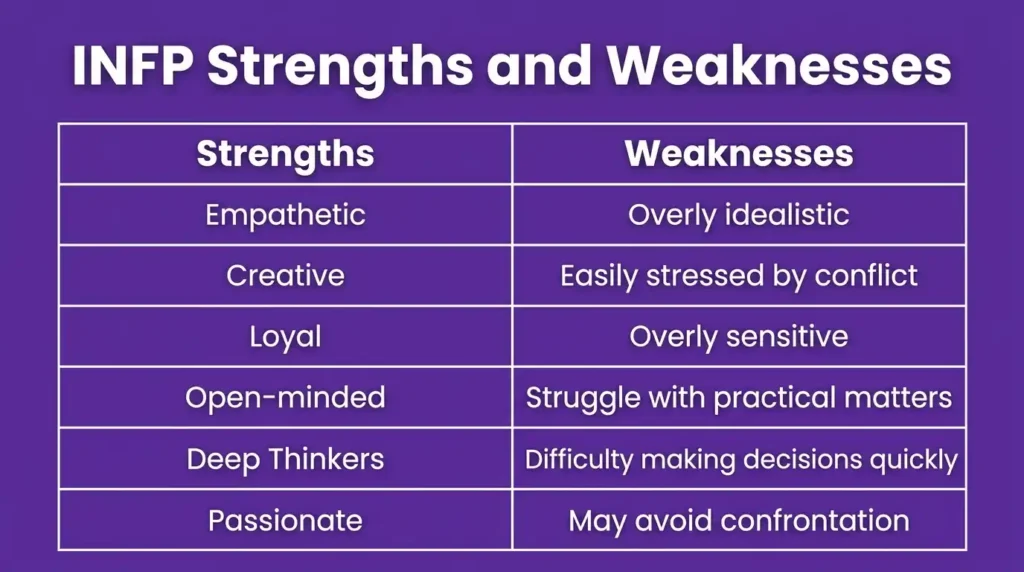
| Strengths | Weaknesses |
| Empathetic and compassionate | Overly idealistic |
| Creative and imaginative | Easily stressed by conflict |
| Loyal and committed to values | Can be overly sensitive |
| Open-minded and flexible | Struggle with practical matters |
| Deep thinkers and introspective | Difficulty making decisions quickly |
| Passionate about helping others | May avoid confrontation |
INFP in Relationships
Romantic Relationships
INFPs are loyal and deeply affectionate partners. They seek meaningful connections and prioritize emotional intimacy over casual flings. They are supportive, understanding, and often go out of their way to nurture their partner’s feelings.
Friendships
INFPs value quality over quantity in friendships. They are caring, empathetic friends who listen deeply and provide emotional support. They thrive in friendships where mutual understanding and shared values are present.
Parenting Style
As parents, INFPs are nurturing, patient, and supportive. They encourage creativity and self-expression in their children while teaching the importance of values and empathy. They may struggle with strict rules, but excel at guiding through love and understanding.
INFP Compatibility With Other Personality Types
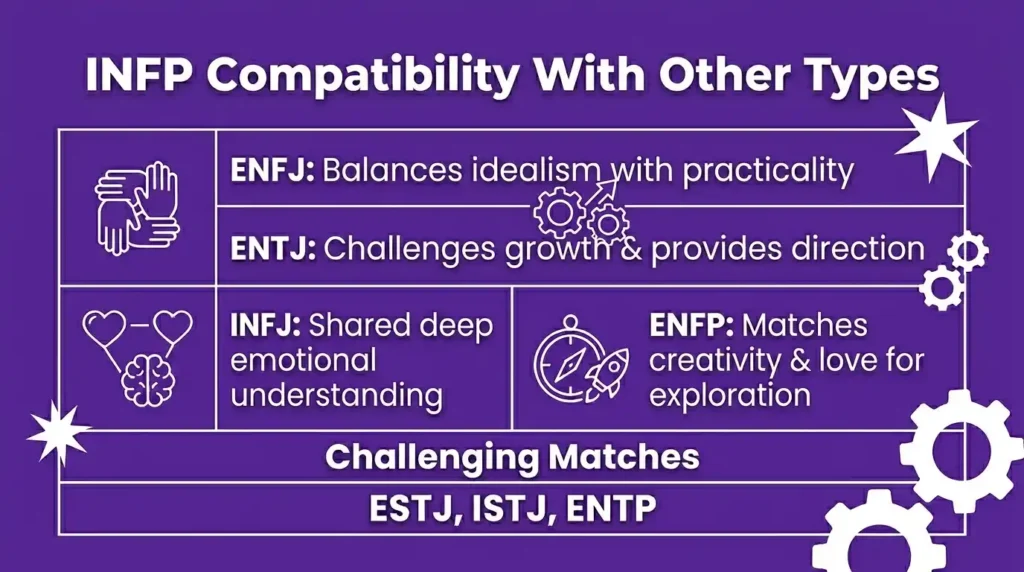
- ENFJ: Often called “The Teacher,” ENFJs balance INFPs’ idealism with practicality and provide emotional support.
- ENTJ: They challenge INFPs to grow while offering structure and direction in life.
- INFJ: Another idealist, INFJs share deep emotional understanding and long-term vision with INFPs.
- ENFP: Energetic and imaginative, ENFPs match INFPs’ creativity and love for exploration.
Challenging Matches
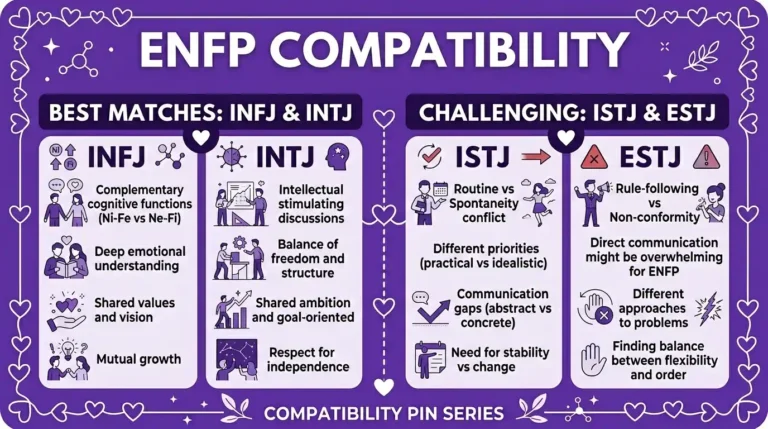
- ESTJ: Their structured, practical approach may conflict with INFPs’ flexible and value-driven nature.
- ISTJ: INFPs may find ISTJs too rigid, while ISTJs may see INFPs as overly idealistic.
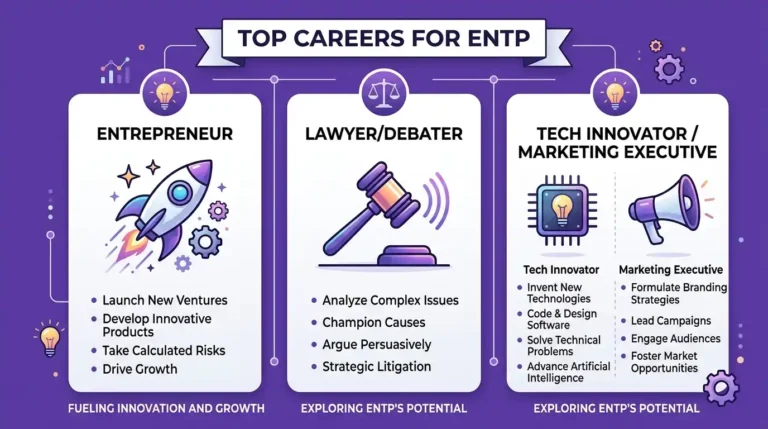
- ENTP: The ENTP Personality Type is energetic, curious, and loves new ideas. Their playful and spontaneous nature can excite INFPs but may test patience if differences arise.
Career Paths for INFPs
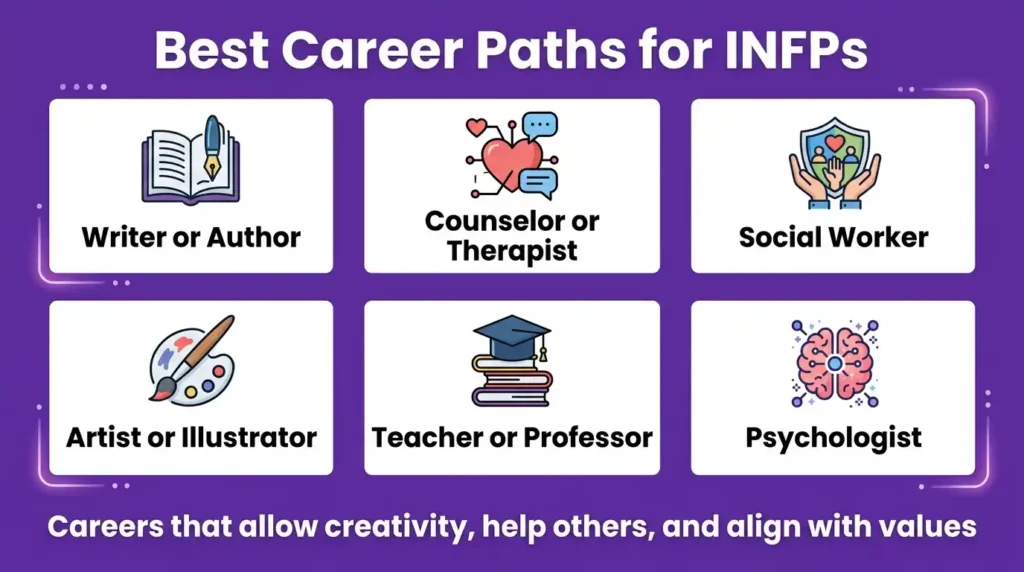
INFPs excel in careers that align with their values, allow creativity, and help others. They thrive in flexible, supportive work environments rather than rigid or highly competitive settings.
- Writer or Author
- Counselor or Therapist
- Social Worker
- Artist or Illustrator
- Teacher or Professor
- Psychologist
- Humanitarian or Nonprofit Worker
- Musician or Composer
These careers let INFPs express creativity, support others, and find personal fulfillment, making work feel meaningful rather than just a job.
Famous INFPs Personalities
Some well-known individuals with an INFP personality include:
- Audrey Hepburn, actress
- J.R.R. Tolkien, author
- Princess Diana, British royal
- William Shakespeare, playwright
- Fred Rogers, television personality
How to Interact With an INFP
Interacting with INFPs is best when you respect their values, listen deeply, and encourage their creativity. They appreciate sincerity and thoughtful communication.
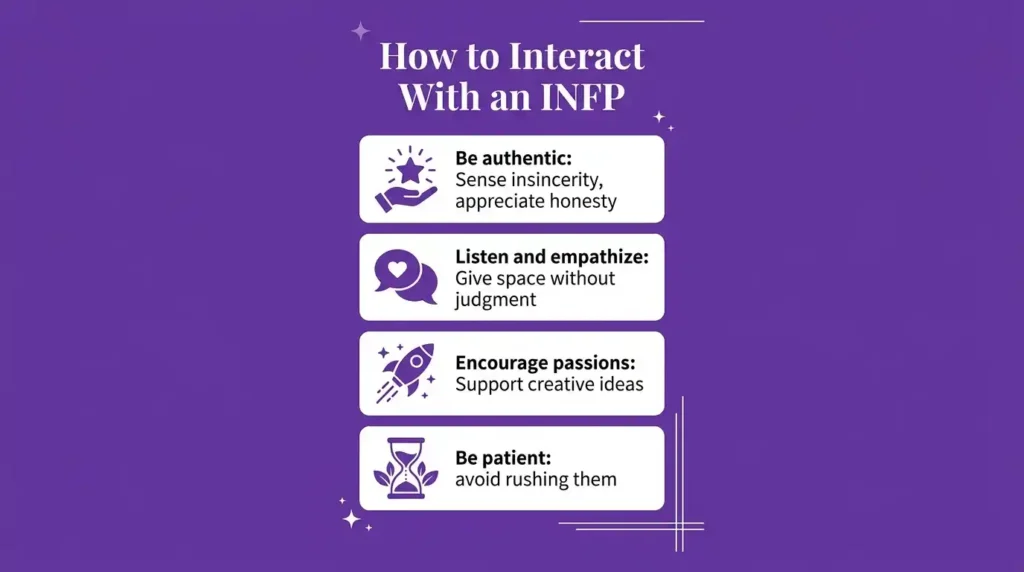
- Be authentic: INFPs quickly sense insincerity, so honesty and genuine intentions go a long way.
- Listen and empathize: Give them space to share their thoughts and feelings without judgment.
- Encourage their passions: Support their creative ideas and personal goals rather than forcing them into rigid plans.
- Be patient: INFPs may take time to open up or make decisions, so avoid rushing them.
Conclusion
INFPs are kind, creative, and caring people who value honesty and meaningful relationships. They think deeply about life and follow their own values in everything they do, which makes them supportive and understanding friends and partners. This thoughtful and idealistic nature is at the heart of the INFP Personality Type, guiding how they connect with others and make choices in life.
Even though they can be sensitive or find it hard to make quick decisions, their creativity, loyalty, and open-mindedness help them make a positive difference. By following their passions and staying true to themselves, INFPs can live happy and meaningful lives.