ENFP Personality Type: Traits, Strengths & Meaning (MBTI)
The ENFP personality type, often called “The Campaigner,” is one of the 16 Myers-Briggs personality types (MBTI). Known for their energy, creativity, and empathy, ENFPs are natural connectors who inspire and motivate others. They are curious, enthusiastic, and driven by a strong desire to find meaning and purpose in everything they do.
Understanding the ENFP personality can help you recognize their key traits, strengths, and potential challenges. This guide will explore their cognitive functions, relationships, career paths, and famous ENFPs, offering valuable insights for anyone who wants to connect with or better understand these dynamic and inspiring personalities.
What Is the ENFP Personality Type?
The ENFP Type is one of the 16 types in the Myers-Briggs Type Indicator (MBTI). ENFP stands for Extraverted, Intuitive, Feeling, and Perceiving. People with this personality type are often energetic, creative, and enthusiastic about exploring new ideas and possibilities.
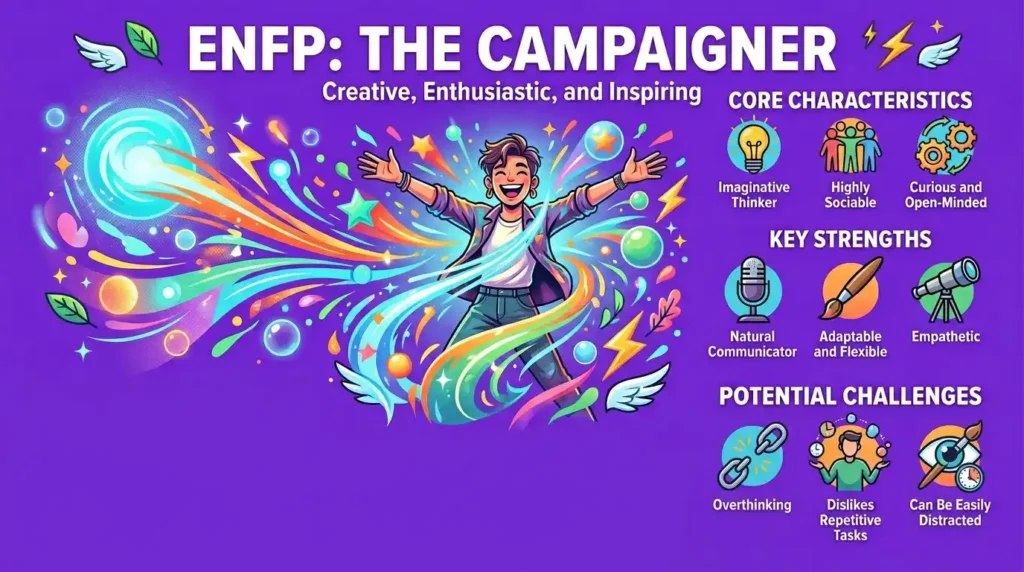
This personality type is often called “The Campaigner” because of their passion for ideas, relationships, and personal growth. ENFPs tend to value authenticity, creativity, and meaningful experiences in both their personal and professional lives.
What does the ENFP Personality Type Stand for?
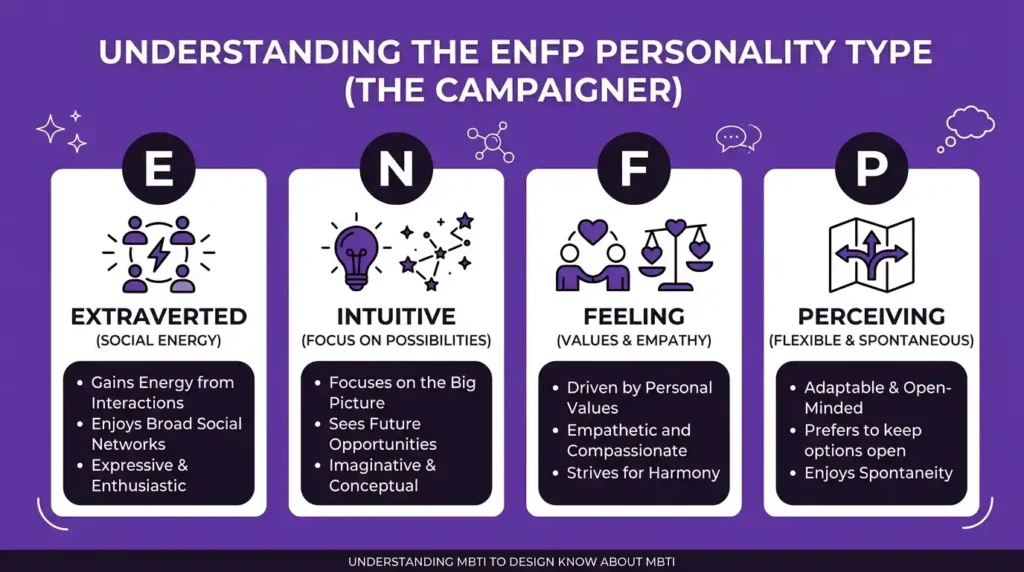
The acronym ENFP represents four key traits: Extraverted, Intuitive, Feeling, and Perceiving. Understanding each component can help you better understand the unique qualities of an ENFP.
E – Extraverted
ENFPs are outgoing and social, drawing energy from interacting with people. They enjoy building connections, sharing ideas, and engaging in lively conversations. This trait makes them approachable, friendly, and often the life of the group. Extraversion also helps ENFPs inspire others with their optimism and enthusiasm.
N – Intuitive
Being intuitive means ENFPs focus on possibilities rather than concrete facts. They are imaginative thinkers who enjoy exploring ideas, patterns, and future opportunities. This trait allows them to see connections that others might miss, making them innovative problem-solvers and creative thinkers.
F – Feeling
The feeling aspect means ENFPs prioritize emotions and values when making decisions. They are empathetic, compassionate, and care deeply about others’ well-being. This trait drives them to build meaningful relationships, advocate for others, and pursue work that aligns with their personal beliefs.
P – Perceiving
ENFPs are flexible and adaptable, preferring to keep their options open rather than following rigid plans. They enjoy spontaneity and are comfortable navigating change. This perceiving nature allows them to embrace new experiences and explore life with curiosity and excitement.
ENFP Personality Subtypes
ENFPs can be divided into two subtypes: ENFP-A and ENFP-T.
ENFP-A: Known as the “Assertive Campaigner,” this subtype is generally more confident and maintains better emotional control in relationships.
ENFP-T: Called the “Turbulent Campaigner,” this type tends to have lower confidence, struggles more with emotional regulation, and often experiences higher anxiety in everyday situations.
Cognitive Functions
The ENFP personality type relies on four primary cognitive functions, which shape how they think, make decisions, and interact with the world. Understanding these functions provides insight into their strengths, challenges, and behavior patterns.
Dominant: Extraverted Intuition (Ne)
The dominant function of ENFPs is Extraverted Intuition (Ne). This makes them highly curious, imaginative, and forward-thinking. ENFPs are constantly exploring new ideas, possibilities, and perspectives. They are quick to notice patterns and connections, which allows them to innovate and think outside the box.
Auxiliary: Introverted Feeling (Fi)
The auxiliary function is Introverted Feeling (Fi). ENFPs use this function to evaluate experiences through the lens of their personal values and emotions. It makes them deeply empathetic, idealistic, and guided by a strong sense of authenticity. Fi ensures that ENFPs remain true to themselves while pursuing what feels meaningful.
Tertiary: Extraverted Thinking (Te)
The tertiary function, Extraverted Thinking (Te), helps ENFPs organize ideas and make practical decisions when necessary. While not as dominant, it allows them to structure projects, manage tasks, and take action on their innovative ideas. They are usually more developed as ENFPs grow and gain life experience.
Inferior: Introverted Sensing (Si)
The inferior function is Introverted Sensing (Si). This function focuses on memory, past experiences, and routines. ENFPs tend to struggle with Si, which can make them forgetful or resistant to strict routines. However, developing this function helps them learn from the past and build stability in their lives.
How Rare Is the ENFP Personality Type?
The ENFP personality is fairly common and is the fifth most common personality type among women. ENFPs are known for their energy, creativity, and enthusiasm, which makes them stand out in social and professional settings.
- 8% of the general population are ENFPs
- 6% of men are ENFPs
- 10% of women are ENFPs
Key Characteristics of ENFPs
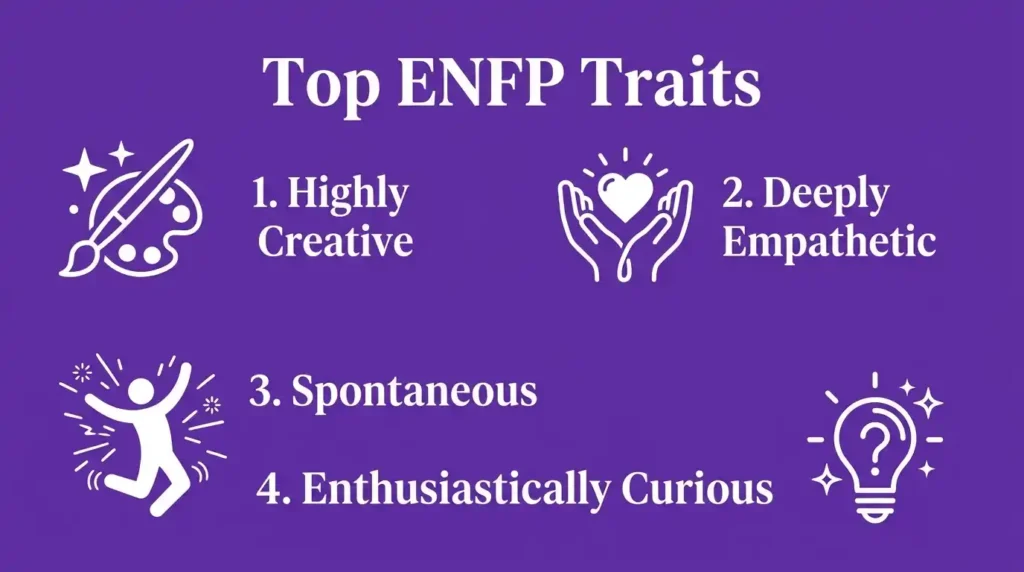
The ENFP personality is known for being enthusiastic, imaginative, and highly people-oriented. ENFPs are often seen as energetic, creative, and empathetic individuals who inspire those around them. Below are some of the most defining traits of ENFPs:
1. Energetic and Enthusiastic
ENFPs are full of energy and excitement. They thrive in social settings and love exploring new ideas, activities, and experiences. Their enthusiasm is contagious, often motivating others to follow their lead.
2. Highly Creative and Imaginative
ENFPs have a natural talent for creativity and innovation. They enjoy thinking outside the box and are drawn to brainstorming, problem-solving, and artistic pursuits. Their imagination allows them to see possibilities that others often overlook.
3. Empathetic and People-Oriented
ENFPs deeply care about others’ feelings and experiences. They are excellent at understanding emotions, offering support, and building strong, meaningful relationships. Their empathy makes them natural communicators and counselors.
4. Curious and Open-Minded
ENFPs are always exploring new ideas, cultures, and perspectives. They enjoy learning, asking questions, and seeking experiences that expand their understanding of the world.
5. Adaptable and Spontaneous
ENFPs prefer flexibility over rigid routines. They are comfortable with change and enjoy the freedom to explore new opportunities, which allows them to adapt quickly to different situations.
ENFP Strengths vs Potential Weaknesses
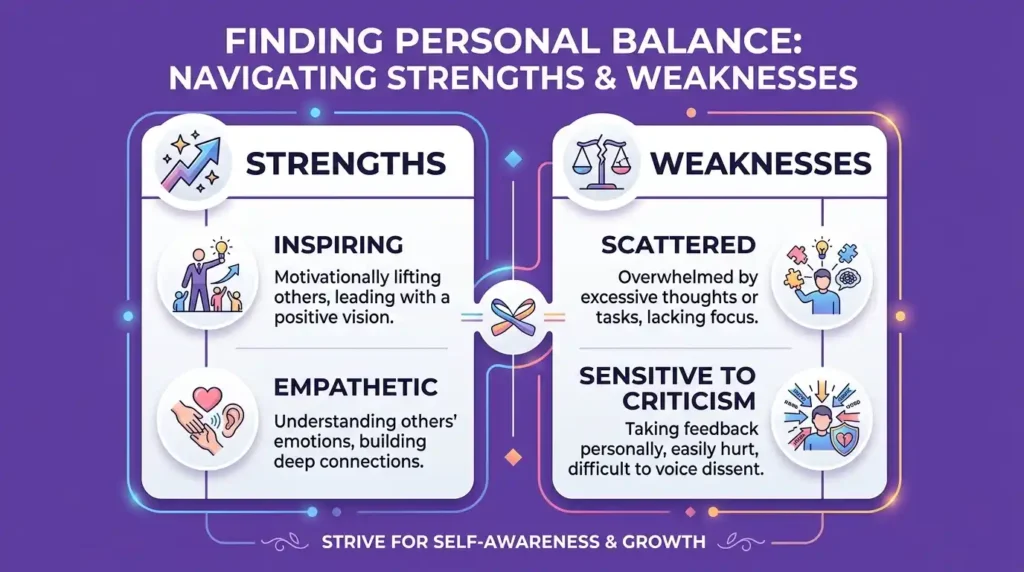
| ENFP Strengths | Potential Weaknesses |
| Enthusiastic and energetic | Can be easily distracted or scattered |
| Highly creative and imaginative | May struggle with follow-through or finishing tasks |
| Empathetic and people-oriented | Can take criticism personally |
| Excellent communication skills | Sometimes overly sensitive to others’ emotions |
| Adaptable and flexible | May avoid routine or structure |
| Curious and open-minded | Can overcommit to too many projects or ideas |
| Inspiring and motivating | May become impatient with slow progress |
| Optimistic and positive | Can be unrealistic about outcomes |
Career Paths for ENFPs
ENFPs thrive in careers that allow creativity, freedom, and meaningful interaction with others. They prefer work environments that are flexible, dynamic, and people-focused, where they can explore new ideas and make a real impact.
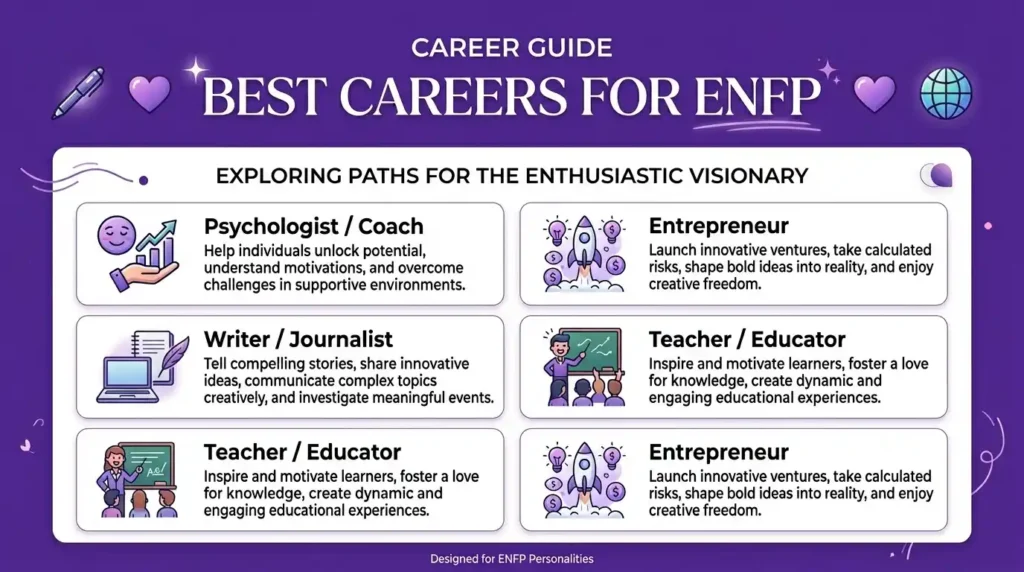
- Psychologist
- Teacher
- Writer
- Journalist
- Entrepreneur
- Musician
- Artist
- Actor
- Motivational Speaker
- Coach
Famous ENFP Personalities
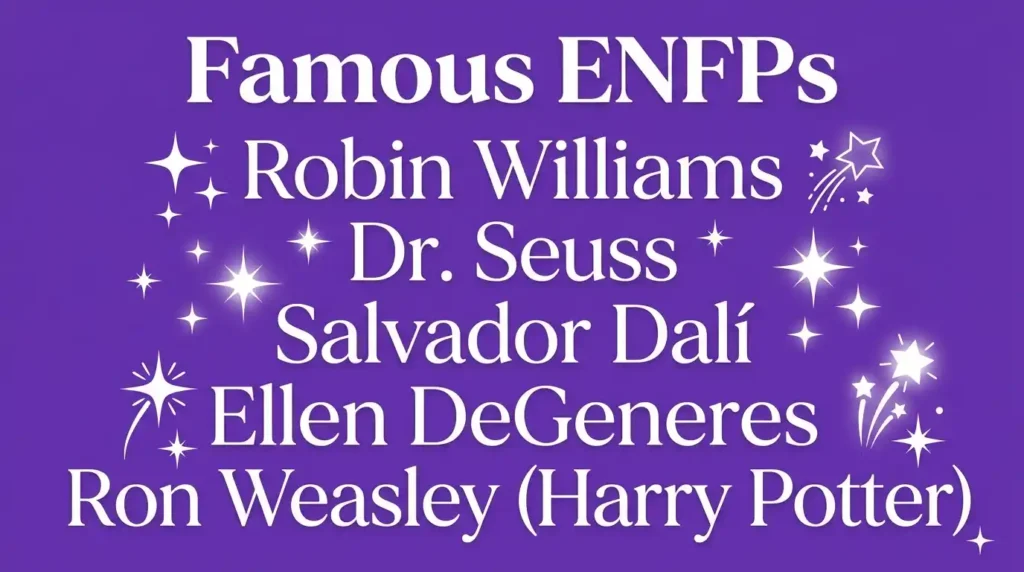
Some well-known ENFPs are:
- Robin Williams – actor and comedian
- Dr. Seuss – children’s author
- Salvador Dalí – artist
- Ellen DeGeneres – comedian and talk show host
- Ron Weasley – character from Harry Potter
ENFP in Relationships
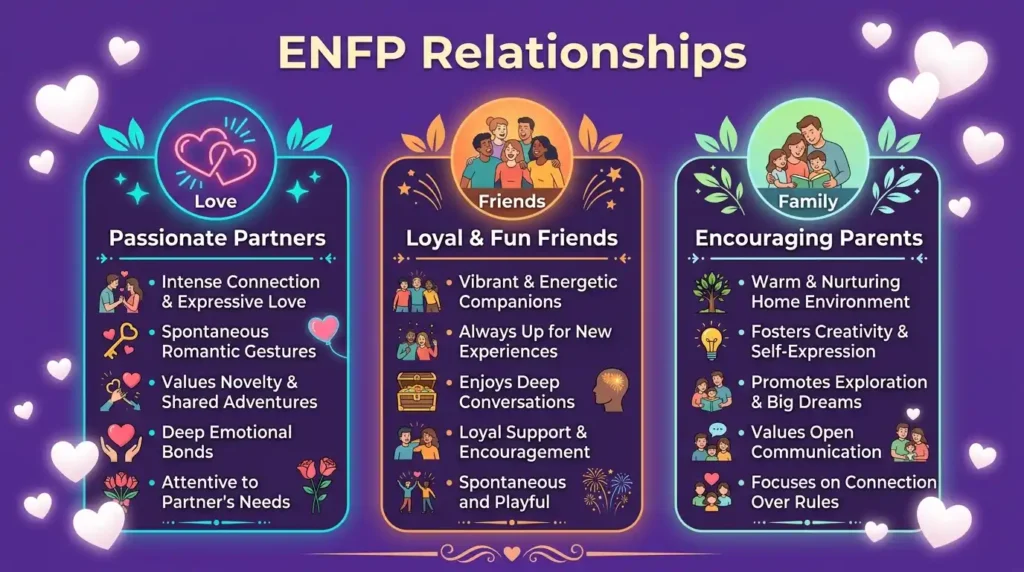
ENFPs are warm, empathetic, and highly social, which makes them engaging partners, friends, and parents. Their energy and enthusiasm often inspire those around them, and they thrive in relationships that allow emotional connection and personal growth.
Romantic Relationships
ENFPs are passionate and affectionate partners. They value emotional intimacy and enjoy deep, meaningful conversations. They are spontaneous, love to try new experiences with their partner, and often express love through words, gestures, and shared adventures. ENFPs need partners who appreciate their energy, creativity, and need for freedom.
Friendships
As friends, ENFPs are loyal, supportive, and fun-loving. They enjoy connecting with people from all walks of life and are excellent at encouraging and inspiring others. ENFPs thrive in friendships that allow openness, laughter, and shared experiences.
Parenting Style
ENFP parents are nurturing, imaginative, and encouraging. They foster creativity and independence in their children, often supporting exploration and self-expression. They focus on teaching values and empathy rather than strict rules, helping children grow into confident and compassionate individuals.
ENFP Compatibility With Other Personality Types
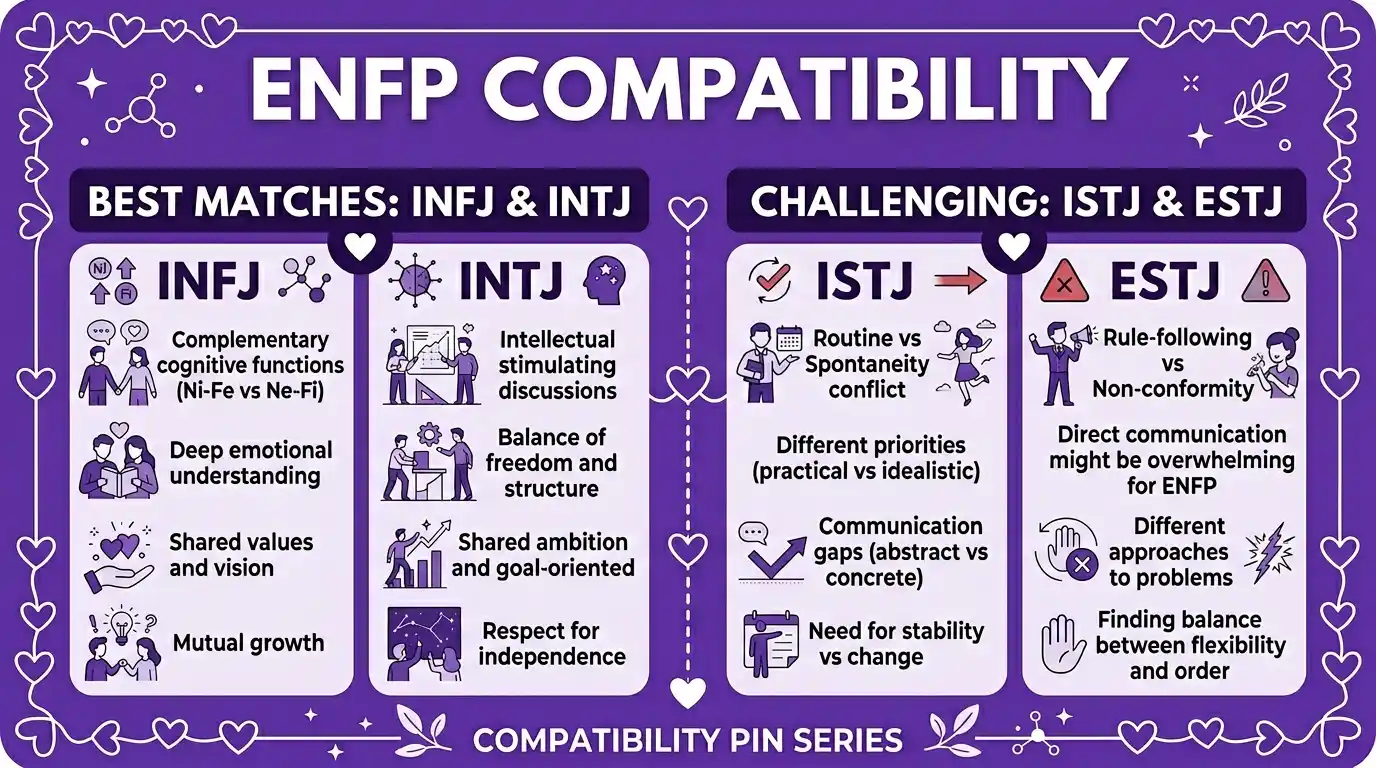
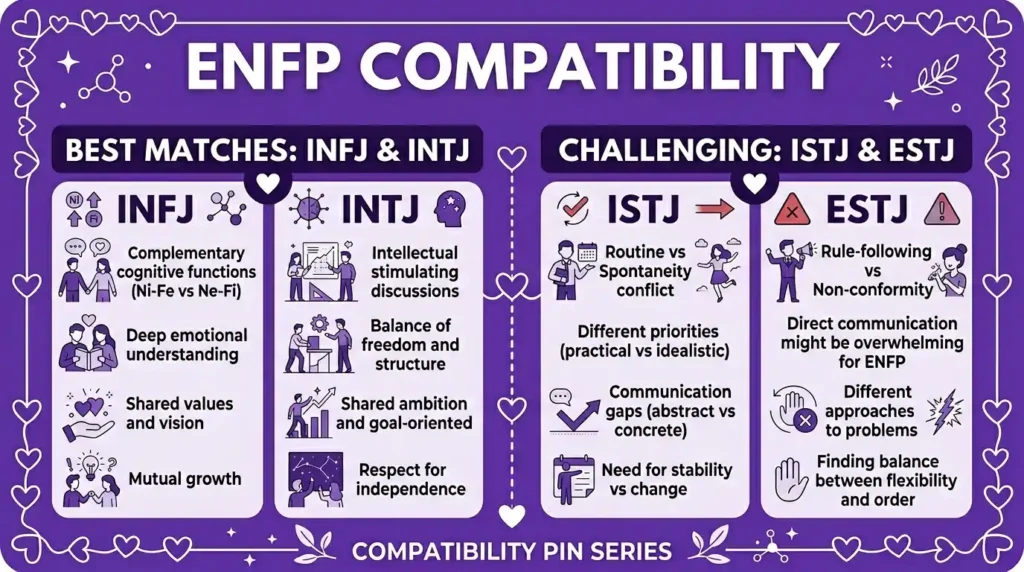
ENFPs connect best with people who appreciate their energy, creativity, and emotional depth.
Highly Compatible Types
- INFJ – Complementary and balanced
- INTJ – Provides structure to ENFP’s spontaneity
- ENTP – Matches energy and love for ideas
- ENFP – Shares excitement and enthusiasm
Moderately Compatible Types
- ISFJ – Offers stability and support
- ESFJ – Warm and sociable
- INFP – Shares empathy and values
Less Compatible Types
- ISTJ – Too rigid for ENFP’s free spirit
- ESTJ – May clash over unpredictability
- ISTP – Struggles with emotional intensity
ENFP Hobbies, Interests & Motivations
ENFPs are curious, energetic, and creative, which shapes their hobbies and motivations. They enjoy activities that stimulate their mind, allow self-expression, and involve social connection.
Common Hobbies and Interests
- Traveling and exploring new cultures
- Creative arts: writing, painting, music, or acting
- Socializing and attending events
- Volunteering and helping others
- Learning new skills or ideas
Key Motivations
ENFPs are driven by personal growth, freedom, and meaningful connections. They are motivated to pursue projects that allow creativity, make a difference, or inspire others.
Tips for Interacting With an ENFP Personality
ENFPs are energetic, creative, and people-focused. They enjoy meaningful conversations, new ideas, and emotional connections. When you interact with them in the right way, they become inspiring, loyal, and fun to be around. Their connection with deeper, more introspective personalities like the INFJ personality type often brings a unique balance of emotion and insight.
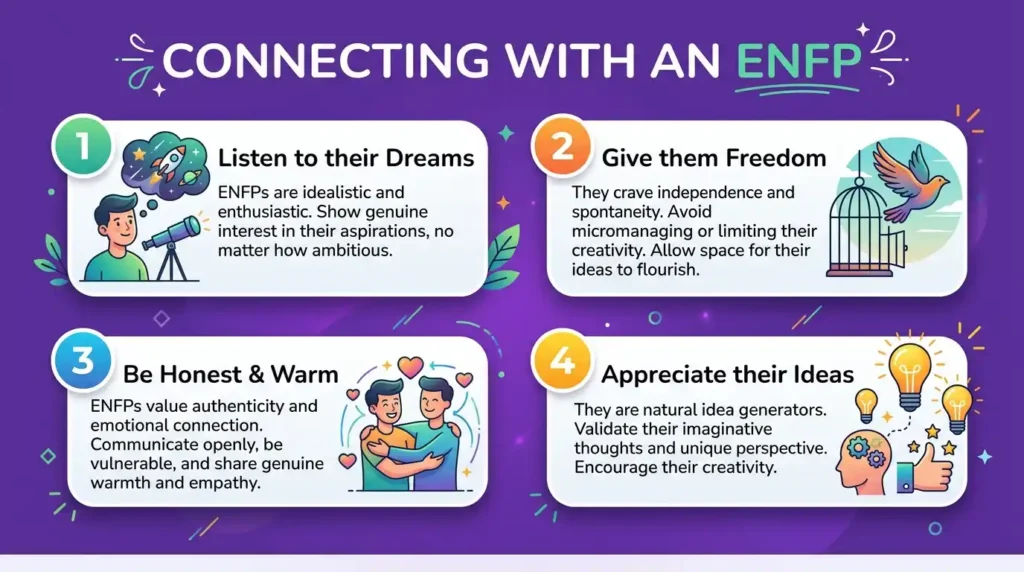
- Be open and expressive in your communication, as ENFPs appreciate honesty, warmth, and emotionally engaging conversations.
- Listen patiently to their ideas and dreams without interrupting or judging, because they love sharing creative thoughts and future plans.
- Allow flexibility and avoid being overly controlling, since ENFPs feel most comfortable when they have freedom to explore and express themselves.
- Appreciate and acknowledge their creativity and efforts, as genuine recognition motivates them and makes them feel valued.
- Offer empathy and emotional support during difficult moments, as they are sensitive and deeply value understanding and compassion.
Conclusion
The ENFP personality type is energetic, creative, and deeply caring about people and ideas. They enjoy freedom, new experiences, and building meaningful connections. Their optimism and imagination make them inspiring friends, partners, and coworkers.
People with the ENFP personality may sometimes struggle with routines or finishing tasks, but their curiosity and flexibility help them grow and overcome challenges. Understanding this personality type can help build better relationships and bring out the best in them.