INFJ Personality Type: Traits, Strengths & Meaning
The INFJ personality type, often called “The Advocate,” is one of the rarest and most intriguing of the 16 Myers-Briggs types. Known for their deep insight, empathy, and vision, INFJs navigate the world with a unique blend of intuition and idealism. They are natural counselors, often seeking meaning and purpose in everything they do.
INFJs are thoughtful and sensitive, yet driven by strong principles. They value authenticity and meaningful connections, making them loyal friends and compassionate partners. Understanding the traits, strengths, and inner motivations of an INFJ can provide clarity for personal growth, relationships, and career choices.
What Is an INFJ Personality Type?
The INFJ personality type is one of the 16 types in the Myers-Briggs Type Indicator (MBTI), often called “The Advocate” or “The Counselor.” INFJs are known for being insightful, compassionate, and idealistic, with a strong desire to help others and make a positive impact in the world. They are rare, making up only about 1–2% of the population, which adds to their mystique and uniqueness.
INFJs are also highly empathetic and idealistic, often caring deeply about others and wanting to make a positive impact in their communities or the world. They prefer purposeful work and meaningful relationships, and their combination of insight and organization helps them turn ideas into action while staying true to their personal values.
What does the INFJ personality type stand for?
The INFJ personality type stands for four specific preferences in the Myers-Briggs Type Indicator (MBTI)
- I – Introversion: INFJs are energized by spending time alone or in small, meaningful settings, reflecting deeply on ideas and emotions.
- N – Intuition: They focus on patterns, possibilities, and the bigger picture rather than just concrete facts or immediate realities.
- F – Feeling: INFJs make decisions based on values, empathy, and concern for others, prioritizing harmony and compassion.
- J – Judging: They prefer structure, planning, and organization, often approaching life with careful preparation and clear goals.
Types of INFJ Personalities
The INFJ personality type can be further divided into two distinct variations:
- INFJ-A (Assertive Advocate): This type typically exudes confidence and approaches life with a calm, self-assured demeanor.
- INFJ-T (Turbulent Advocate): Individuals with this type are often more prone to stress and may struggle with self-doubt, making them less confident in comparison.
INFJ Cognitive Functions
The INFJ personality type relies on a unique stack of cognitive functions that shape how they think, feel, and interact with the world
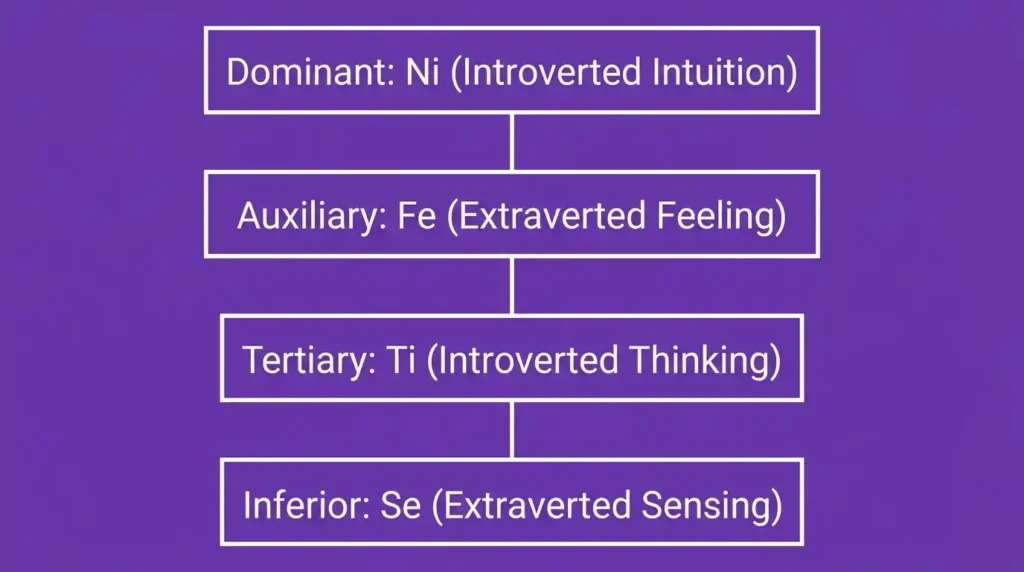
- Dominant: Introverted Intuition (Ni) – This is the INFJ’s main way of understanding the world. They focus on patterns, future possibilities, and underlying meanings, often seeing connections that others miss. Ni gives INFJs their visionary and insightful nature.
- Auxiliary: Extraverted Feeling (Fe) – This function helps INFJs connect with others and respond to their emotional needs. Fe makes them empathetic, compassionate, and skilled at understanding social dynamics.
- Tertiary: Introverted Thinking (Ti) – Ti allows INFJs to analyze ideas logically behind the scenes, helping them refine their insights and organize thoughts internally. It supports decision-making and problem-solving in a quiet, thoughtful way.
- Inferior: Extraverted Sensing (Se) – Se is the weakest function for INFJs, often making them less focused on immediate sensory details. They may sometimes overlook the present moment, but developing Se can help them enjoy experiences and be more grounded in reality.
Key Characteristics of an INFJ Personality
The INFJ personality type is known for its depth, empathy, and vision. People with this type often combine insight, creativity, and strong values to understand the world and help others meaningfully.
Deeply Insightful: INFJs have a strong ability to see patterns and understand underlying meanings in people and situations.
Highly Empathetic: They are sensitive to others’ emotions and naturally offer support and understanding.
Idealistic and Purpose-Driven: INFJs are guided by their values and strive to make a meaningful difference in the world.
Private and Reserved: They often keep their thoughts and feelings to themselves, sharing only with those they trust.
Organized and Goal-Oriented: They like structure and planning, working methodically to achieve their visions and objectives.
Creative and Imaginative: INFJs use their intuition and creativity to come up with innovative ideas and solutions.
Conflict-Averse: They prefer harmony and can be easily affected by tension or criticism.
Strengths and Weaknesses of INFJs
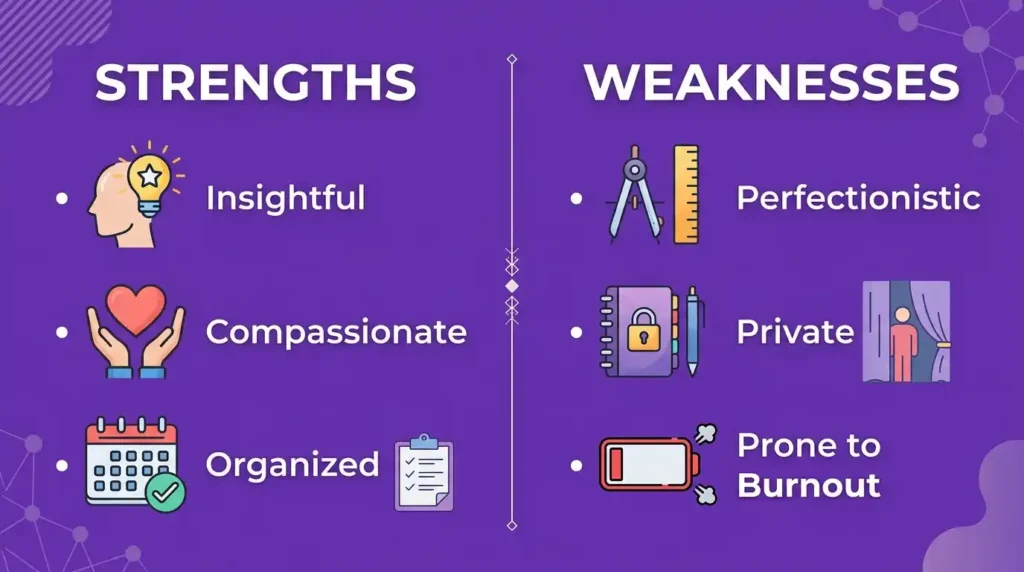
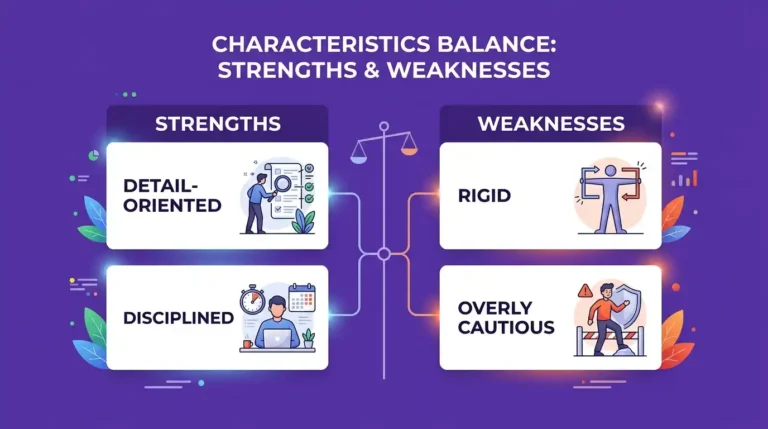
| Strengths of INFJs | Potential Weaknesses of INFJs |
| Empathetic – deeply understand and care about others’ feelings. | Overly sensitive – may take criticism personally. |
| Insightful – notice patterns and meanings others often miss. | Perfectionistic – set very high standards for self and others. |
| Idealistic – motivated to make a positive difference. | Private – may struggle to share thoughts and feelings. |
| Organized – plan carefully and work steadily toward goals. | Stubborn – can resist alternative viewpoints. |
| Creative – generate innovative ideas and long-term solutions. | Prone to burnout – may overextend to help others. |
| Loyal – value deep, meaningful relationships. | Conflict-averse – avoid confrontation, even when necessary. |
INFJs in Relationships
Romantic Relationships
INFJs are deeply committed and loyal partners. They seek meaningful connections and emotional intimacy, often prioritizing their partner’s needs alongside their own. They value honesty, empathy, and shared values, and they thrive in relationships where communication is open and feelings are respected.
Friendships and Social Connections
While INFJs are introverted, they form close, lasting friendships with people who share their values and interests. They prefer quality over quantity, investing time and energy in friends they trust and understand. They are supportive, attentive, and often act as the “counselor” in their social circles.
Compatibility with Other Personality Types
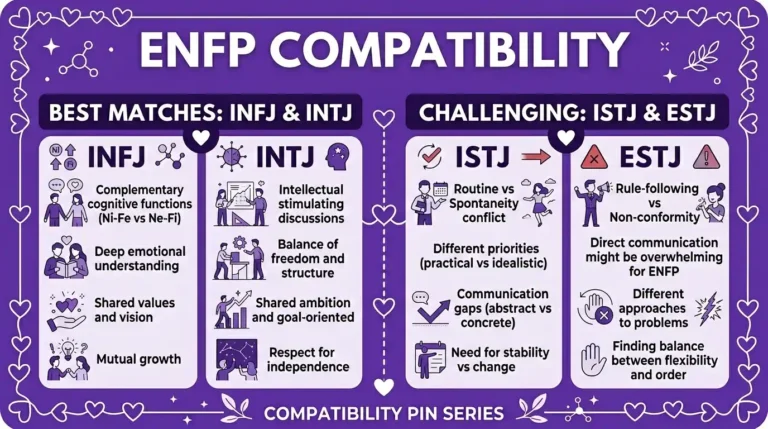
INFJs are often most compatible with types that complement their strengths and share similar values. They tend to connect well with ENFPs and ENTJs, who balance their introversion with energy or drive, and with other intuitive-feeling types who value depth, empathy, and meaningful conversations. They may struggle with highly practical or overly critical types, as these personalities can clash with the INFJ’s idealism and sensitivity.
INFJ Careers and Work Style
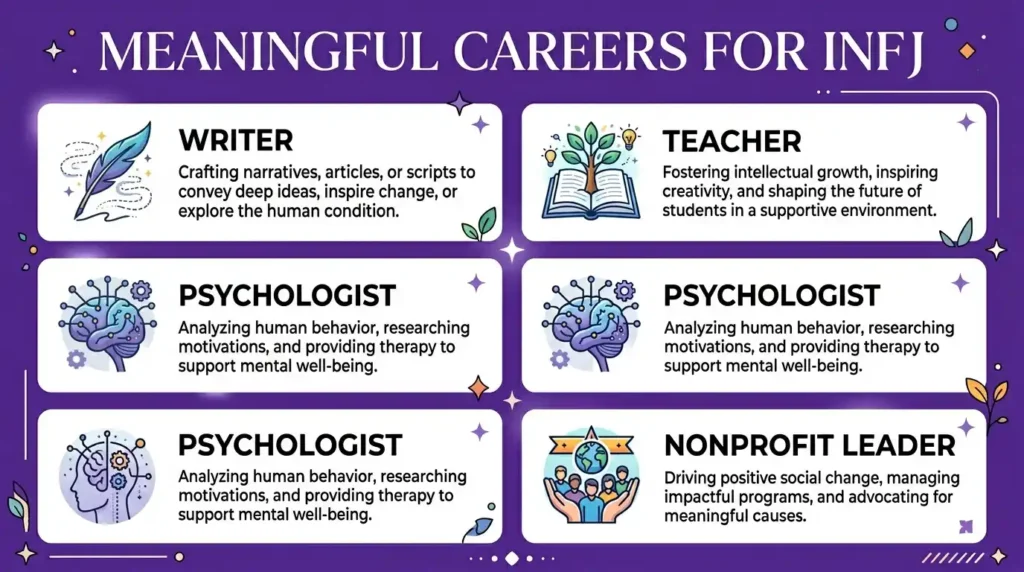
INFJs thrive in roles that allow them to make a meaningful impact and align with their values. Ideal careers often involve helping, guiding, or creating. Some examples include
- Counselor or Therapist
- Teacher or Educator
- Nurse or Healthcare Professional
- Writer, Author, or Editor
- Artist or Creative Professional
- Social Worker or Humanitarian
- Life Coach or Mentor
- Strategic Planner or Consultant
- Psychologist or Psychiatrist
- Nonprofit or Advocacy Work
Work Strengths and Challenges
Strengths
- Highly empathetic and collaborative, creating positive team dynamics.
- Visionary and strategic, seeing long-term goals and possibilities.
- Organized and detail-oriented, capable of planning and executing projects effectively.
- Committed and reliable, often going above and beyond in their work.
Challenges
- Can be perfectionistic, which may slow progress or cause stress.
- May avoid conflict, struggling to address issues directly with coworkers.
- Can become overwhelmed if they take on too many responsibilities or emotional burdens.
Real-Life Famous INFJs Personalities
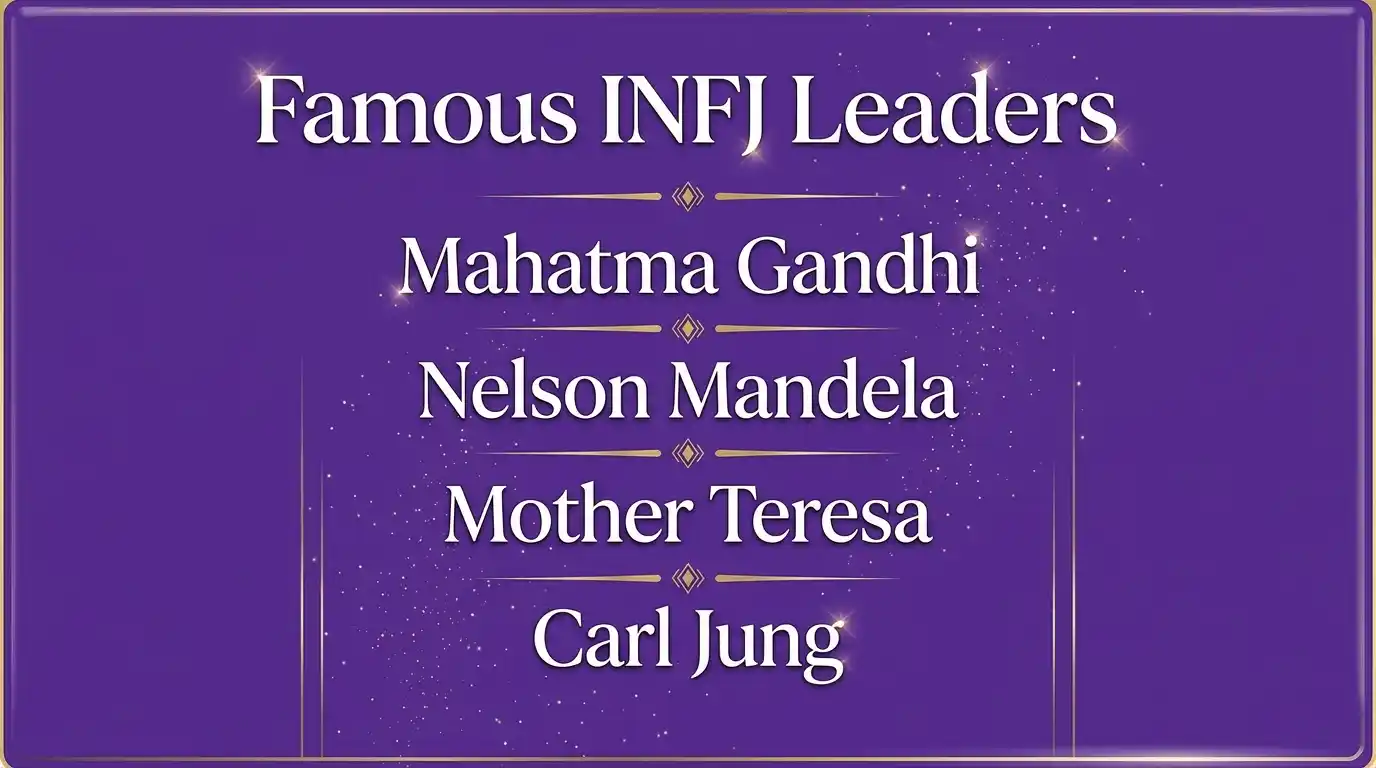
- Mahatma Gandhi – Visionary leader known for empathy, idealism, and commitment to nonviolent change.
- Martin Luther King Jr. – Advocate for justice and equality, driven by values and deep compassion.
- Mother Teresa – Dedicated her life to helping others, embodying selfless care and humanitarian work.
- Nelson Mandela – Combined insight, vision, and patience to bring meaningful social change.
- Carl Jung – Psychologist and thinker, known for deep introspection and understanding of the human psyche.
- Nicole Kidman – Actress known for emotional depth and thoughtful roles.
Fictional Characters Representing INFJ Traits
- Atticus Finch (To Kill a Mockingbird) – Moral, empathetic, and guided by strong principles.
- Albus Dumbledore (Harry Potter) – Wise, visionary, and caring leader.
- Galadriel (The Lord of the Rings) – Insightful, idealistic, and deeply spiritual.
- Elrond (The Lord of the Rings) – Thoughtful, strategic, and compassionate leader.
- Jon Snow (Game of Thrones) – Loyal, principled, and driven by a sense of duty.
How to Interact With INFJs
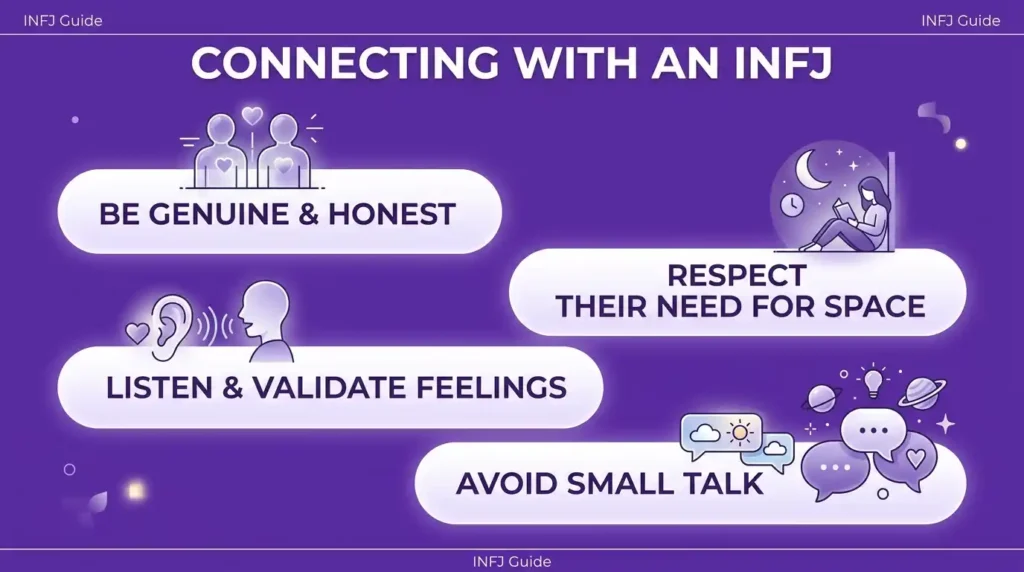
1. Be Genuine and Honest
INFJs value authenticity and can usually sense when someone is being insincere. Speak honestly and respectfully, and avoid superficial or manipulative behavior.
2. Respect Their Need for Space
As introverts, INFJs need alone time to recharge. Give them space when needed and don’t pressure them to be constantly social.
3. Listen and Acknowledge Their Feelings
They are highly empathetic and appreciate when others listen deeply and validate their emotions. Show understanding without immediately trying to “fix” things.
4. Engage in Meaningful Conversations
INFJs enjoy discussing ideas, values, and future possibilities rather than small talk. Ask thoughtful questions and share your own insights.
5. Be Patient With Their Reserved Nature
They may take time to open up or share their deeper thoughts. Don’t rush them; patience builds trust and stronger connections.
6. Support Their Goals and Ideals
INFJs are often driven by purpose. Encouraging their passions, vision, and personal growth strengthens your bond and shows you care.
Dos and Don’ts
Dos:
- Be patient and understanding.
- Show appreciation for their efforts and insight.
- Encourage them to share their thoughts without pressure.
Don’ts:
- Don’t dismiss their feelings or ideals.
- Avoid unnecessary confrontation or harsh criticism.
- Don’t overwhelm them with too much social activity or noise.
Conclusion
INFJs are rare personalities, combining insight, empathy, and a deep sense of purpose. They are guided by values and strive to make a meaningful difference in the world. Their creativity and compassion help them connect with others on a profound level.
While they may face challenges like sensitivity or perfectionism, their strengths keep them resilient. Respecting their ideals and need for space fosters stronger connections. Ultimately, INFJs quietly inspire and bring positive change wherever they go.