ENTP Personality Type: Traits, Strengths, Weaknesses, and Compatibility
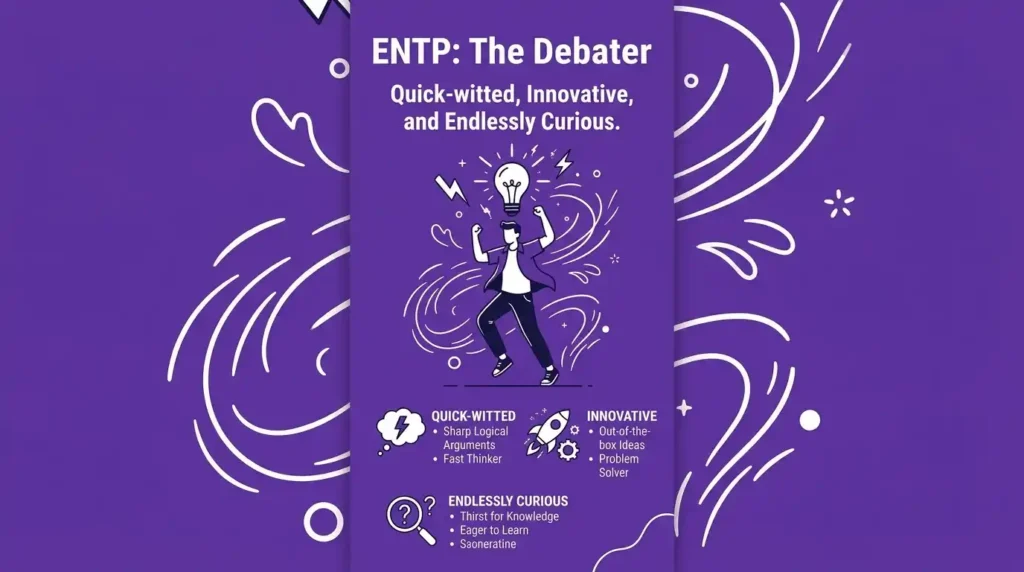
The ENTP personality type is known as the “Debater” of the personality world, full of energy, curiosity, and a love for exploring new ideas. People with this type are natural innovators who thrive on challenge and enjoy thinking outside the box. Their quick wit and adaptability make them exciting and unpredictable companions in both work and life.
ENTPs are driven by curiosity and the desire to understand how things work. They are confident in expressing their ideas, enjoy brainstorming, and are always ready to tackle new opportunities. While they can sometimes struggle with follow-through, their creativity and enthusiasm often inspire those around them.
What Is the ENTP Personality Type?
Commonly known as the Debater or the Visionary, this is one of the sixteen types identified in the Myers Briggs Type Indicator. The letters stand for Extraverted, Intuitive, Thinking and Perceiving, and together they describe someone who is naturally curious, intellectually driven and constantly drawn to new ideas and possibilities.
People with this type are known for their ability to think quickly, communicate confidently and approach problems from angles most people would not consider. They enjoy exploring how things work, questioning existing systems and imagining better alternatives. While they bring enormous energy and creativity to everything they do, they can sometimes struggle with follow through, especially when a task becomes repetitive or stops feeling mentally stimulating.
How rare is the ENTP personality type really?
ENTPs, sometimes called Rational Inventors, are relatively uncommon in the general population. Estimates suggest they make up about 5 to 11% of people, which means you won’t encounter them everywhere, but they’re not extremely rare either.
What makes ENTPs stand out is their natural curiosity and inventive thinking. They have a talent for generating ideas, exploring possibilities, and bringing energy to conversations or projects, which makes their presence easy to notice despite their small numbers.
What Does ENTP Stand For?
The acronym ENTP describes four key traits within the Myers-Briggs Type Indicator that define this personality type. Each letter highlights a core aspect of how ENTPs think, interact, and approach the world.
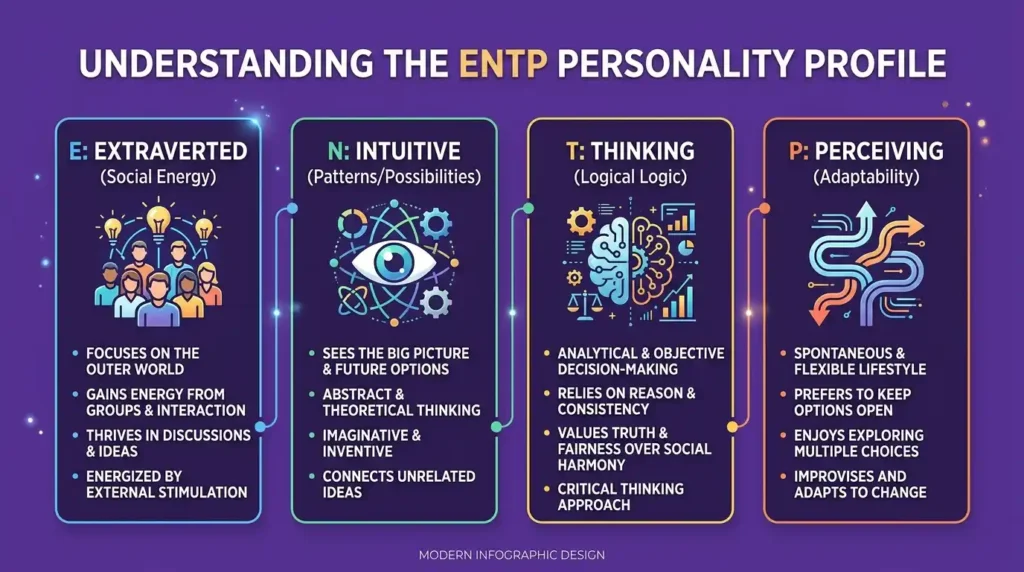
Extraverted (E)
ENTPs gain energy from interacting with others. They enjoy social settings, lively discussions, and brainstorming ideas with people rather than spending most of their time alone.
Intuitive (N)
ENTPs focus on possibilities and patterns rather than just immediate facts. They are drawn to big-picture thinking, innovation, and imagining new ways to approach challenges.
Thinking (T)
ENTPs make decisions based on logic and objective analysis. They value reasoning over emotions and prefer to evaluate situations with a clear, rational approach.
Perceiving (P)
ENTPs are flexible and adaptable. They enjoy keeping their options open, exploring new opportunities, and going with the flow rather than sticking to strict plans or routines.
ENTP Subtypes
The ENTP personality type can be divided into two subtypes: ENTP-T and ENTP-A.
- ENTP-T (Turbulent Debaters): These ENTPs are more sensitive to approval and attention. They often experience emotions like anger, jealousy, or envy, and their behavior tends to be more emotionally driven.
- ENTP-A (Assertive Debaters): These ENTPs are more self-assured and confident. They generally assume others accept them and are less focused on their feelings, making them less emotionally reactive than ENTP-Ts.
ENTP Cognitive Functions Explained
ENTPs use a unique combination of cognitive functions that shape how they think, make decisions, and interact with the world. Understanding these functions helps explain their curiosity, adaptability, and problem-solving style.
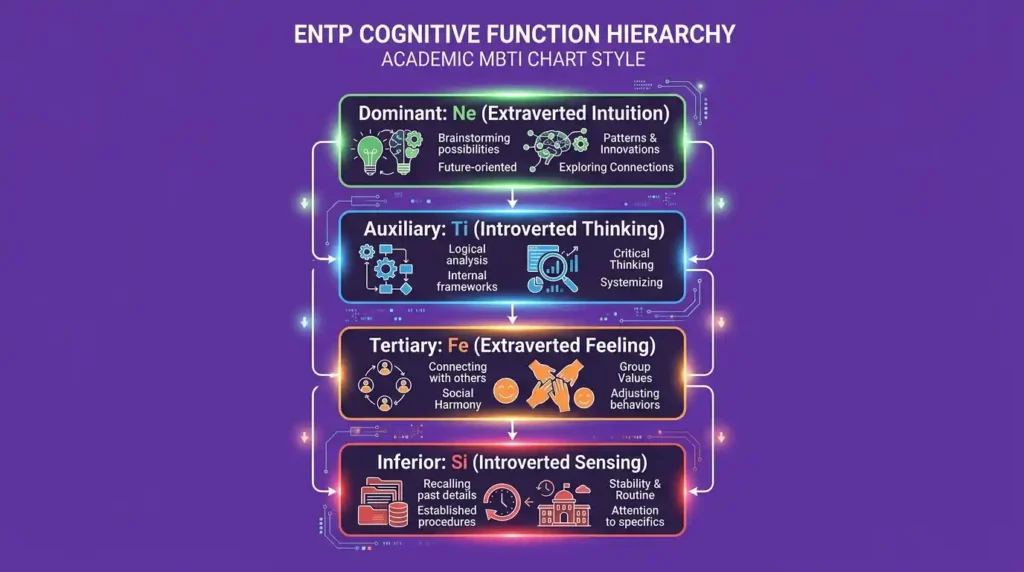
Dominant Function – Extraverted Intuition (Ne)
This is the ENTP’s strongest function. It drives their love for exploring ideas, spotting patterns, and imagining possibilities. Ne makes them naturally curious, quick to connect concepts, and excited by new opportunities.
Auxiliary Function – Introverted Thinking (Ti)
Ti helps ENTPs analyze ideas and organize their thoughts logically. It gives them a sharp, analytical side that evaluates concepts, identifies flaws, and finds efficient solutions.
Tertiary Function – Extraverted Feeling (Fe)
Fe allows ENTPs to tune into the emotions and needs of others. While not as dominant, it helps them connect socially, navigate group dynamics, and adjust their communication to be more empathetic.
Inferior Function – Introverted Sensing (Si)
Si is the least developed function in ENTPs. It focuses on details, routines, and past experiences. ENTPs may struggle with consistency or remembering specifics, but developing Si can help them ground their big ideas in reality.
Key Characteristics of an ENTP Personality
ENTPs are often described as energetic, inventive, and endlessly curious. They love exploring new ideas, challenging assumptions, and finding creative solutions to problems. Their minds move quickly, and they enjoy connecting seemingly unrelated concepts in surprising ways.
- Adaptable and spontaneous: They thrive in flexible environments and enjoy trying new approaches rather than sticking to routines.
- Confident communicators: ENTPs are persuasive, witty, and enjoy engaging others in debate or conversation.
- Innovative problem-solvers: They excel at thinking outside the box and seeing opportunities that others might overlook.
- Independent thinkers: ENTPs value autonomy and prefer making decisions based on their own logic and observations rather than following tradition.
- Sociable and energetic: They gain energy from people and enjoy lively discussions, brainstorming sessions, and collaborative projects.
ENTP Strengths and Weaknesses
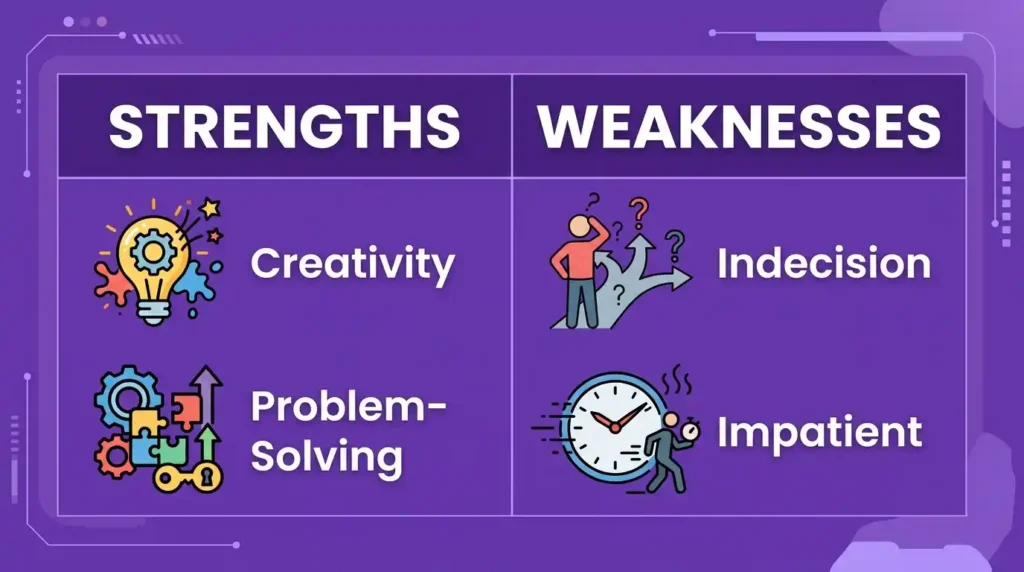
| Aspect | ENTP Strengths | ENTP Weaknesses |
| Creativity | Highly imaginative and innovative, always generating new ideas | Can get carried away with ideas and struggle to follow through |
| Adaptability | Flexible and quick to adjust to changing situations | May resist routines or long-term planning |
| Communication | Charismatic, persuasive, and enjoys debates | Sometimes talks more than listens, which can frustrate others |
| Problem-Solving | Excellent at finding unconventional solutions | Can overanalyze or overcomplicate problems |
| Confidence | Self-assured and willing to take risks | Overconfidence can lead to underestimating challenges |
| Social Energy | Energized by interactions and networking | May become impatient with slow or detail-oriented tasks |
| Independence | Values autonomy and original thinking | Can struggle with authority or collaborative constraints |
How ENTPs Think and Make Decisions
ENTPs are natural problem-solvers who approach decisions with curiosity and creativity. They rely on Extraverted Intuition (Ne) to explore possibilities and generate ideas, then use Introverted Thinking (Ti) to analyze and evaluate them logically. They prefer flexibility over strict plans, often weighing multiple options before choosing a path. While they are quick thinkers, ENTPs can sometimes overanalyze or change direction if a better opportunity arises.
ENTP Personality in Relationships
Romantic Relationships
In romance, ENTPs are energetic, playful, and spontaneous. They enjoy keeping the relationship exciting and thrive on intellectual connection. They’re attentive partners who bring humor and creativity to the relationship, but they may struggle with routines or long-term consistency.
Friendship Style
ENTPs are loyal, fun, and engaging friends. They love sharing ideas, debating, and inspiring others to think differently. Their enthusiasm can be contagious, though some friends may find their unpredictability or restlessness challenging at times.
ENTP as a Parent
As parents, ENTPs encourage curiosity, independence, and exploration. They make parenting playful and stimulating, always ready for creative activities or new experiences. They may need to work on consistency and setting boundaries, but their children often grow up inspired and confident.
ENTP Compatibility With Other Personality Types
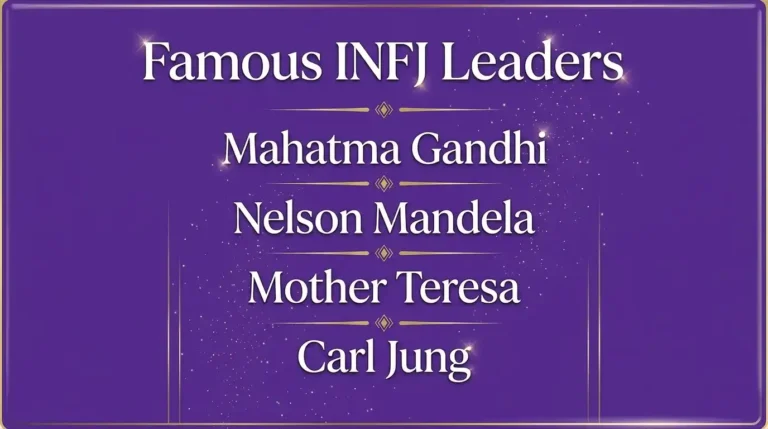
ENTPs often connect best with personalities that value curiosity, flexibility, and intellectual stimulation. Types like INFJ, INTP, ENFP, and ENTJ tend to complement their energy, offering depth, focus, and shared enthusiasm for exploration.
Challenging Matches
ENTPs may struggle with personalities that are highly rigid, detail-focused, or overly sensitive to spontaneity, such as ISTJ, ISFJ, or ESTJ. Differences in pace, priorities, or social energy can lead to tension unless both parties practice understanding and compromise.
Best Careers for ENTP Personality
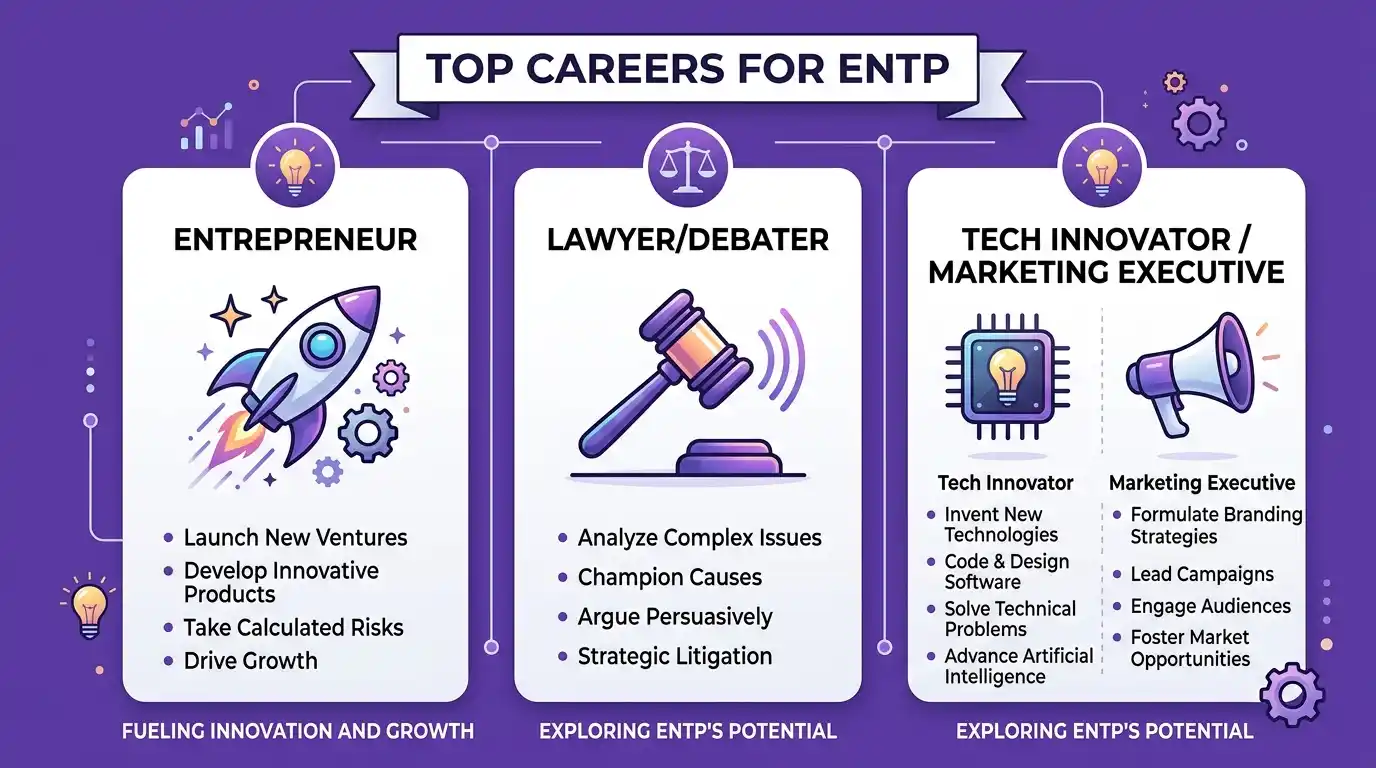
ENTPs thrive in careers that allow them to use their creativity, problem-solving skills, and love for variety. They excel in roles that are dynamic, challenging, and require innovative thinking rather than repetitive routines. ENTPs enjoy environments where they can brainstorm ideas, take calculated risks, and interact with people
- Entrepreneur
- Marketing Manager
- Advertising Executive
- Consultant
- Lawyer
- Journalist
- Media Producer
- Product Designer
- Innovator in Tech
- Teacher or Coach
- Public Relations Specialist
- Actor or Performer
- Sales Manager
- Event Planner
- Strategic Planner
Famous ENTPs
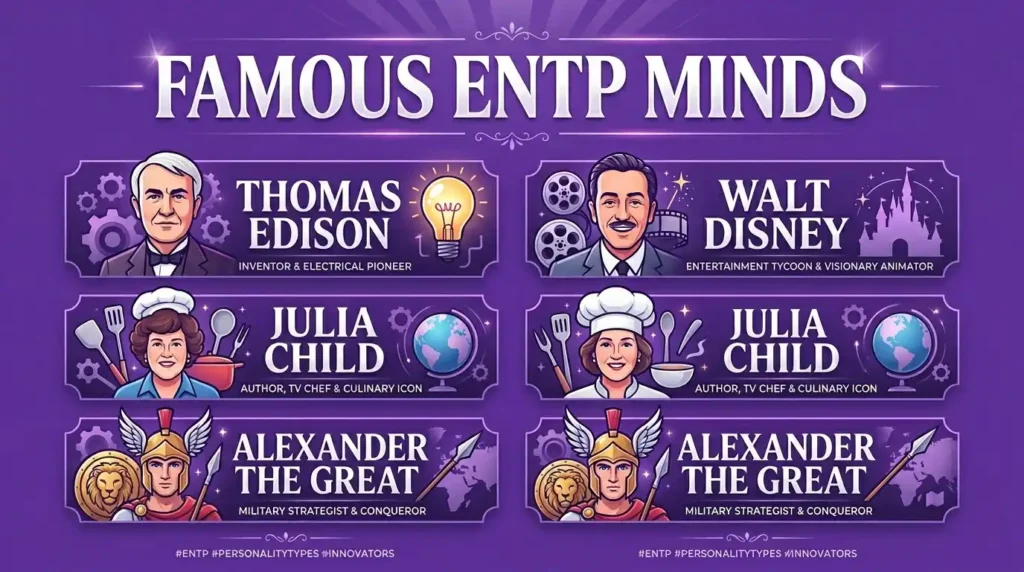
- Thomas Edison – Inventor
- John Adams – U.S. President
- Walt Disney – Filmmaker
- Julia Child – Chef
- Alexander the Great – King and Military Leader
How to Get Along With an ENTP
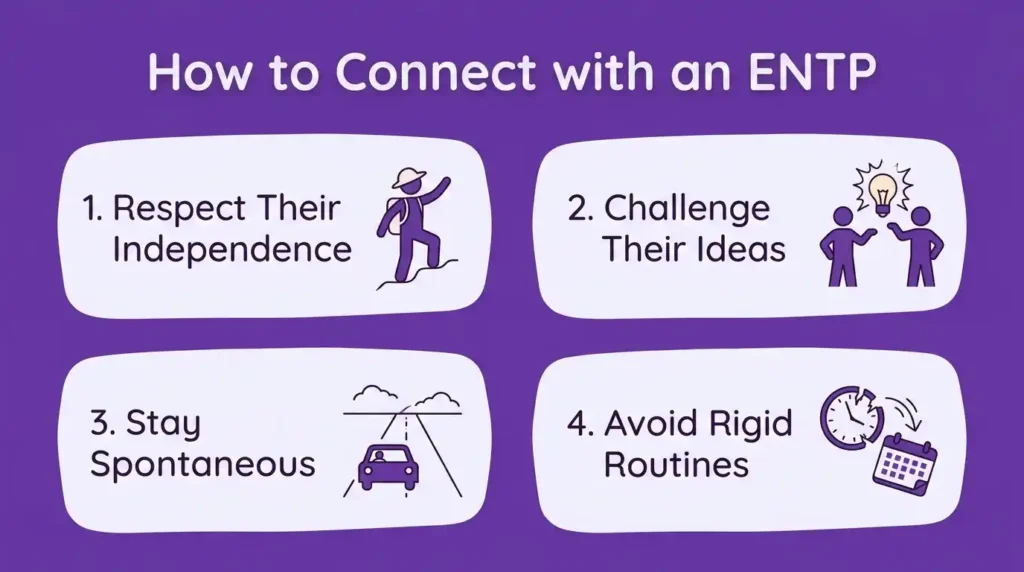
Getting along with an ENTP is all about embracing their energy, curiosity, and love for ideas. They enjoy lively conversation, brainstorming, and playful debates, so being open-minded and engaging will help you connect with them.
Some tips for building a strong relationship with an ENTP include:
- Be open to new ideas: ENTPs love exploring possibilities and unconventional perspectives. Show curiosity and willingness to discuss different viewpoints.
- Keep things flexible: They dislike rigid schedules and strict routines. Adapt to change and be spontaneous when possible.
- Engage in meaningful conversation: ENTPs thrive on intellectual stimulation. Ask questions, challenge their ideas respectfully, and share your own insights.
- Appreciate their humor and energy: They enjoy playful banter and witty interactions. Laugh with them and embrace their lively personality.
- Give them space for independence: ENTPs value freedom and may need room to explore their interests. Avoid being overly controlling or restrictive.
ENTP Hobbies and Interests
ENTPs are naturally curious, energetic, and adventurous, so their hobbies usually reflect their love for learning, creativity, and social interaction. They enjoy activities that challenge their minds, allow for self-expression, or involve exploring new experiences.
- Debating and discussion groups – Enjoying intellectual challenges and exploring different perspectives
- Creative pursuits – Writing, painting, design, or other forms of self-expression
- Entrepreneurial projects – Starting businesses, side projects, or innovative ventures
- Travel and adventure – Exploring new places, cultures, and experiences
- Gaming and strategy – Board games, video games, or puzzles that challenge their problem-solving skills
- Learning new skills – Picking up languages, technology, or practical skills for fun and growth
- Social events and networking – Meeting new people, attending workshops, or participating in lively gatherings
Conclusion
Understanding the ENTP personality type is really just the beginning. Behind all the debate, the big ideas, and the restless energy is someone who genuinely wants to make sense of the world and push it forward in their own way. Routines may slow them down, but the right environment brings out the best in them.
In work, relationships, and everyday life, ENTPs thrive when they have the freedom to think, explore, and connect with people who match their curiosity. They are not always the easiest people to keep up with, but they are almost always worth it.