
ENTJ Personality Type: Key Traits, Strengths, and Insights
ENTJ personality traits define individuals who are confident, strategic, and driven to achieve their goals. People with the ENTJ personality type naturally take charge in situations, turning ideas into action and inspiring others along the way. Their focus and determination make them stand out in both personal and professional life.
These traits help ENTJs solve problems efficiently and stay organized even under pressure. They are skilled at planning, motivating teams, and making decisive choices. Understanding these characteristics offers valuable insights for growth, better relationships, and success in every area of life.
What Is an ENTJ Personality Type?
The ENTJ personality type is known as “The Commander.” It is famous for strong leadership and strategic thinking. People with this type are confident and goal-oriented. They are excellent at organizing teams and projects. They thrive when planning for the future. They enjoy creating systems that improve efficiency. ENTJs are natural decision-makers. They like taking charge and achieving ambitious goals.
They are highly logical and analytical. They value competence and results. Sometimes, they can struggle with emotions. Still, they excel at inspiring and motivating others. Understanding these traits can help with personal growth. It can also improve career success. It can help build stronger relationships. By knowing how ENTJs think and act, you can make better choices and use your strengths effectively.
What does the ENTJ personality type stand for?
ENTJ stands for Extraversion (E), Intuition (N), Thinking (T), and Judging (J). Each letter represents a key aspect of how ENTJs perceive the world and make decisions:
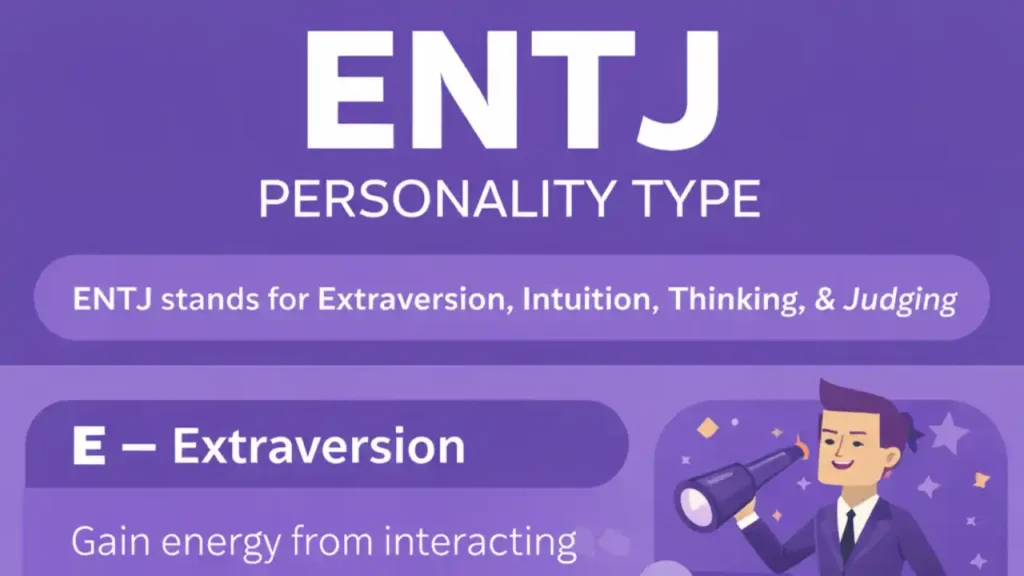
- E – Extraversion: ENTJs gain energy from interacting with others and enjoy leading and engaging with people.
- N – Intuition: They focus on the big picture, future possibilities, and strategic thinking rather than just immediate facts.
- T – Thinking: ENTJs prioritize logic and objective reasoning over emotions when making decisions.
- J – Judging: They prefer structure, planning, and organization, often setting clear goals and following them efficiently.
How rare is the ENTJ Personality?
The ENTJ personality is considered one of the rarest of the 16 Myers-Briggs types. Only about 2–5% of the population are ENTJs, and it is slightly more common in men than women. Their rarity comes from the combination of traits they possess: strong leadership, strategic thinking, high confidence, and a natural drive to achieve goals.
This makes ENTJs stand out in professional and social settings, often taking on roles where they can lead and make an impact.
Key Characteristics of ENTJs
ENTJs are known as natural leaders who combine confidence, ambition, and strategic thinking. Understanding their traits can help in personal growth, career success, and building strong relationships.
- Natural Leaders: ENTJs are confident, assertive, and excel at taking charge of teams and projects.
- Strategic Thinkers: They focus on long-term goals and create efficient plans to achieve them.
- Highly Ambitious: ENTJs are goal-oriented and driven to succeed in both career and personal life.
- Logical and Analytical: They make decisions based on facts and objective reasoning rather than emotions.
- Organized and Decisive: ENTJs prefer structure, set clear plans, and follow through efficiently.
- Inspirational and Motivating: They can rally people around a shared vision and encourage high performance.
ENTJs Strengths and Weaknesses
| Strengths of ENTJs | Weaknesses of ENTJs |
| Natural leadership and ability to inspire others | Can be overly dominant or controlling |
| Strategic and visionary thinkers | May overlook emotions and feelings of others |
| Highly confident and decisive | Impatience with delays or inefficiency |
| Goal-oriented and ambitious | Can appear stubborn or inflexible |
| Excellent at organizing and planning | Sometimes insensitive in personal relationships |
| Strong problem-solving and analytical skills | May struggle with work-life balance |
Understanding ENTJ Cognitive Functions
The ENTJ personality type relies on a set of cognitive functions that shape how they think, make decisions, and interact with the world. Each function plays a specific role in their behavior and strengths.
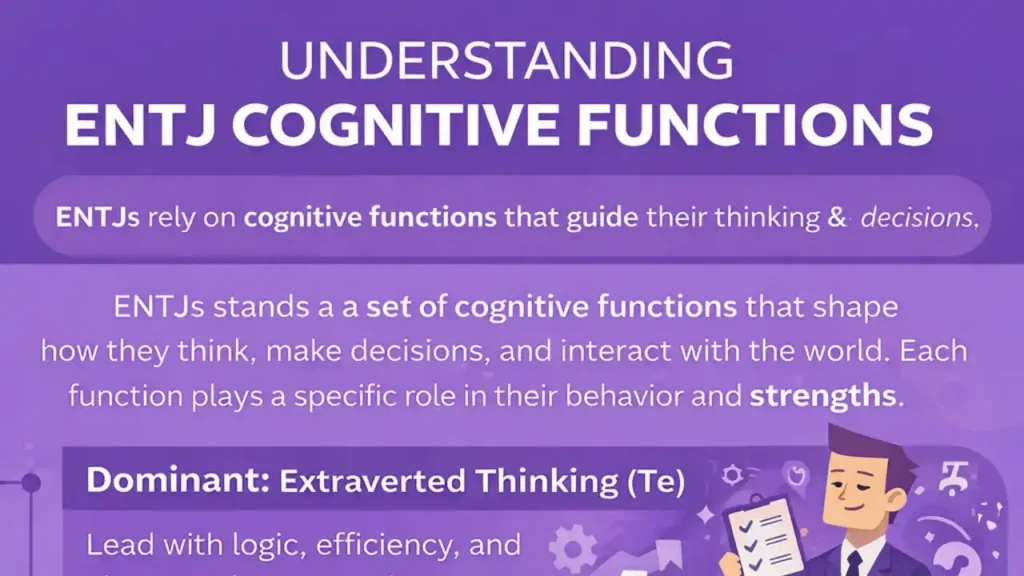
- Dominant: Extraverted Thinking (Te) – ENTJs lead with logic, efficiency, and objective decision-making. They focus on results and organizing their environment to achieve goals.
- Auxiliary: Introverted Intuition (Ni) – This function helps ENTJs see patterns, anticipate future outcomes, and plan strategically. It supports their long-term vision.
- Tertiary: Extraverted Sensing (Se) – ENTJs use this function to stay aware of their surroundings, take action, and respond to immediate opportunities.
- Inferior: Introverted Feeling (Fi) – The weakest function, Fi influences ENTJs’ personal values and emotions. While not dominant, developing it helps them connect with others on a deeper emotional level.
How ENTJs Think and Make Decisions?
ENTJs approach thinking and decision-making with logic, efficiency, and a focus on results. They rely on Extraverted Thinking (Te) to analyze situations objectively, prioritize tasks, and create structured plans to achieve their goals. Their decisions are often fast, confident, and aimed at long-term success.
They also use Introverted Intuition (Ni) to see patterns, anticipate outcomes, and consider future possibilities. To better understand the framework behind personality types, you can explore the Myers Briggs Type Indicator. While ENTJs value efficiency and logic over emotions, they can improve their decision-making by considering the feelings and values of others. This combination of strategic thinking and decisive action makes ENTJs natural leaders and problem-solvers.
ENTJ Subtypes
ENTJs can be divided into two distinct subtypes:
- ENTJ-T (Turbulent Commander): More emotionally sensitive and affectionate, this type often seeks validation and attention. They can be prone to anger, jealousy, and are generally more sentimental.
- ENTJ-A (Assertive Commander): Confident and self-assured, ENTJ-As assume others’ acceptance and are less emotionally reactive. They handle stress and negativity with greater ease.
Famous ENTJs
- Franklin D. Roosevelt – Former U.S. President
- Bill Gates – Microsoft Co-Founder
- Vince Lombardi – Legendary Football Coach
- Carl Sagan – Renowned Astronomer
- Lex Luthor – Fictional Character from Superman
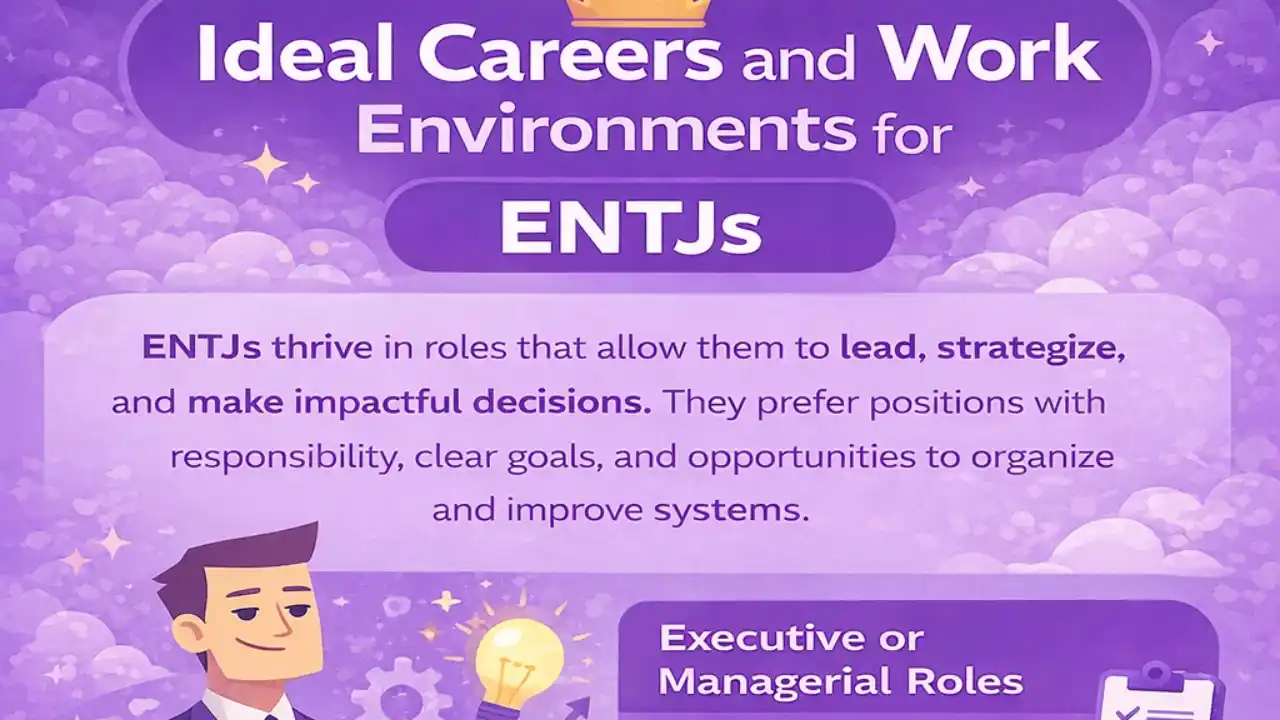
Ideal Careers and Work Environments for ENTJs
ENTJs thrive in roles that allow them to lead, strategize, and make impactful decisions. They prefer positions with responsibility, clear goals, and opportunities to organize and improve systems.
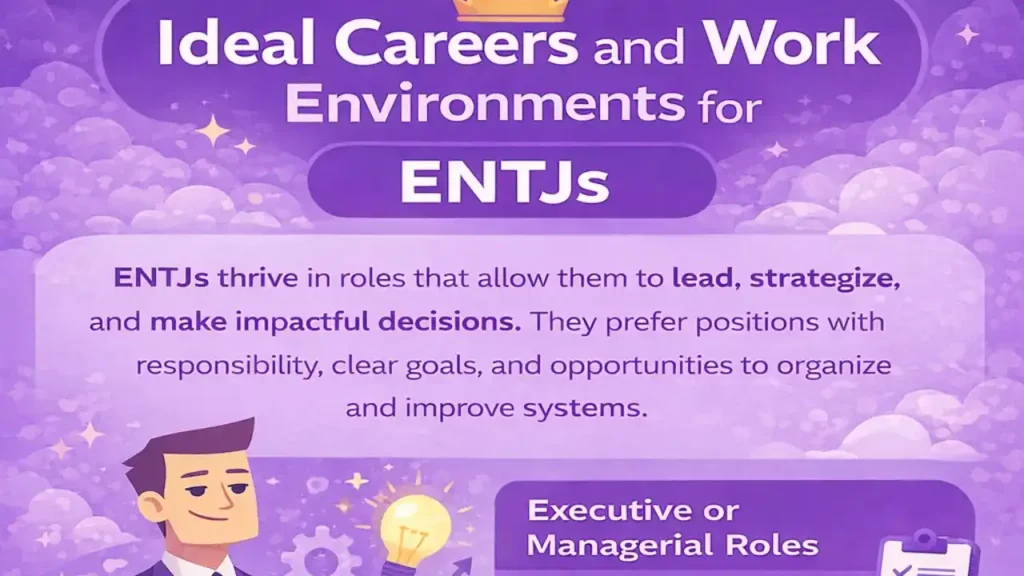
- Executive or Managerial Roles
- Entrepreneurs and Business Leaders
- Project Managers
- Consultants and Strategists
- Lawyers or Corporate Attorneys
- Engineers and Financial Analysts
Best Work Environments for ENTJs
- Fast-paced and challenging workplaces
- Roles with leadership or decision-making authority
- Environments that value efficiency and results
- Opportunities for growth, innovation, and long-term planning
- Teams that allow collaboration but respect their strategic vision
ENTJ in Personal Relationships
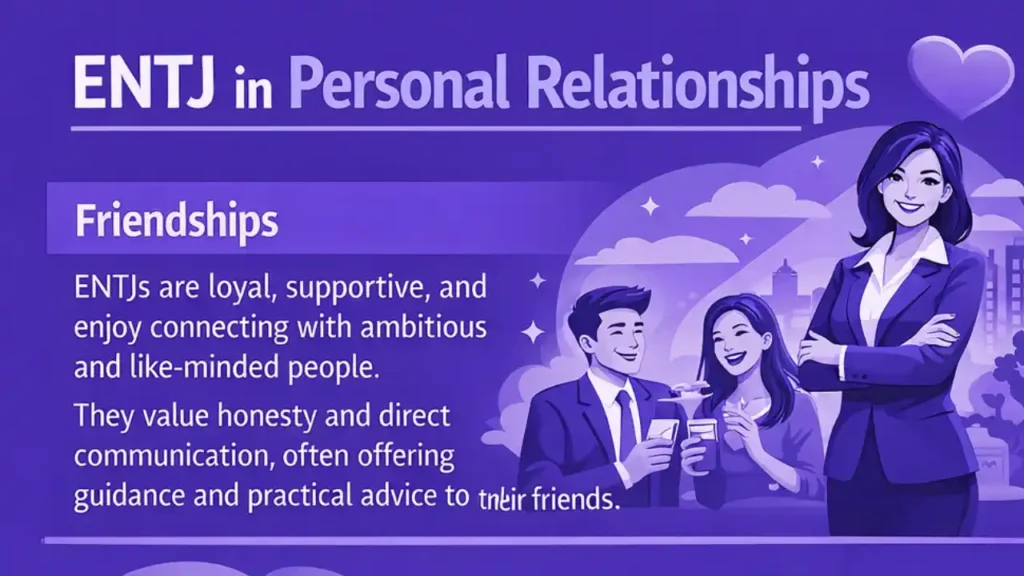
Friendships: ENTJs are loyal, supportive, and enjoy connecting with ambitious and like-minded people. They value honesty and direct communication, often offering guidance and practical advice to their friends.
Romantic Relationships: In love, ENTJs are confident, passionate, and committed. They seek partners who are independent, intelligent, and able to match their drive and energy. While they may prioritize goals and efficiency, they can be deeply devoted and protective of those they love.
Parenting Style: As parents, ENTJs are structured, encouraging, and goal-oriented. They teach children responsibility, independence, and critical thinking while guiding them toward success. Their parenting style is firm but supportive, helping kids develop confidence and ambition.
How to Interact With an ENTJ?
Interacting with an ENTJ works best when you are direct, confident, and goal-focused. They appreciate honesty, clear communication, and practical solutions over small talk or vague ideas.
When conflicts arise, stay calm and logical, offer constructive solutions, and respect their need for control. ENTJs value efficiency and results, so focus on solutions rather than dwelling on problems.
How to Handle Conflict and Stress with an ENTJ
ENTJs approach conflict logically and prefer fast, solution-focused resolutions. Stay calm, be direct, and present clear, practical solutions. Avoid being overly emotional or passive, as they respond best to rational discussion.
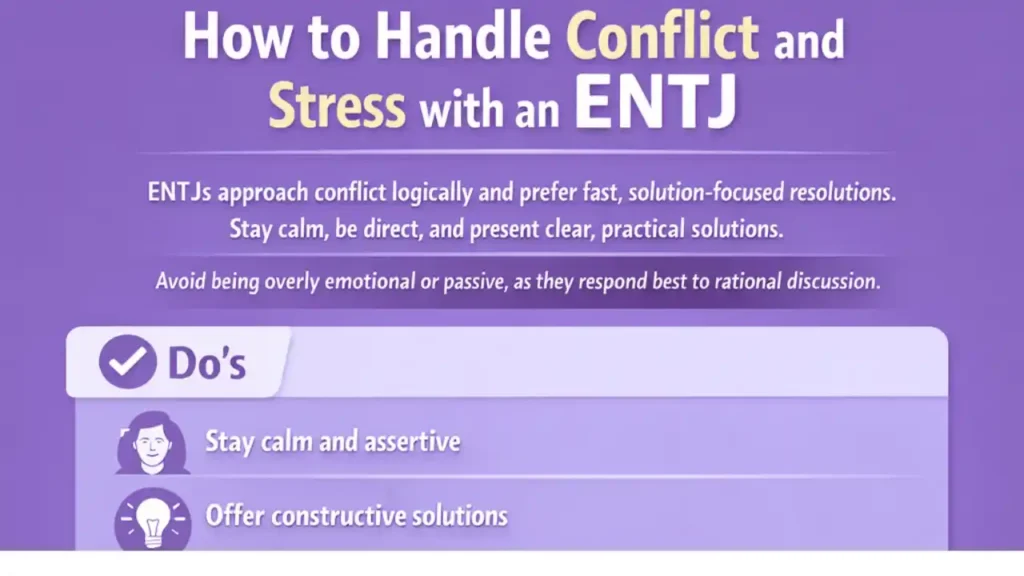
Do’s:
- Stay calm and assertive
- Offer constructive solutions
- Respect their time and perspective
- Focus on resolving the issue efficiently
Don’ts:
- Don’t overreact emotionally
- Don’t avoid the problem
- Don’t dismiss their ideas or authority
- Don’t waste time on unnecessary arguments
Conclusion
ENTJs, “The Commanders,” are natural leaders driven by ambition, strategy, and results. They excel at organizing, planning, and inspiring others, making them stand out in both work and personal life. While they may sometimes struggle with emotions, their confidence and decisiveness help them tackle challenges head-on.
By understanding an ENTJ personality type’s strengths, weaknesses, and thought patterns, you can build stronger relationships. It also helps you communicate more effectively with them. Balancing their natural drive with emotional awareness allows ENTJs to lead with both power and connection. They can achieve success while also fostering meaningful bonds.